Meet AI CFO: instant what-ifs, real accuracy
Blog
December 8, 2023
December 18, 2025

12 Best Financial Analysis Software for Your Business

Oleksandr Riabukha
Head of R&D at Fuelfinance
December 18, 2025
Best Financial Analysis Software for Your Business

Running a business without managing your finances is like trying to cook a fantastic meal without keeping an eye on the stove – you risk burning the entire dish you so carefully prepared. Since about 82% of small-business failures stem from mismanaged cash flow, this just shows how important real-time financial-analysis tools are for a company's financial health to prosper.

Managing finances can seem daunting, but what if we told you that there are apps that can do all this for you, some of them even coming with expert support?

In this article, we'll cover the best financial analysis software solutions for companies of all sizes.

Best financial analysis software: Comparison table

Tool Features Best for
Fuelfinance
  • Advanced automation
  • Financial projections
  • Unit economics
  • Expert support
  • AI CFO
Agencies, CFOs and growing businesses looking for all-in-one financial software
Microsoft Excel
  • Templates and formulas
  • Copilot
  • Power BI tables
Small businesses with a limited budget
Cube Software
  • Multi-scenario analysis
  • Multi-currency support
  • Role-based access
Businesses working with multiple currencies
Causal
  • Dynamic modeling
  • Automation
  • Interactive dashboards
Big finance team that promotes collaboration
Datarails
  • Financial analysis
  • Data visualization
  • Scenario modeling
People looking for an add-in for Microsoft Excel
LiveFlow
  • Automation
  • Vendor spending tracker
  • Customizable reports
People looking for an add-in for Google Sheets
QuickBooks
  • Automated bookkeeping
  • Invoicing and payments
  • Financial reporting
Small to mid-sized businesses needing comprehensive accounting software
Anaplan
  • Connected planning
  • Scenario modeling
  • Customization
Large enterprises with complex planning needs across multiple departments
Sage Intacct
  • Financial management
  • Multi-entity management
  • Dimensional reporting
Mid-market companies needing robust financial management with multi-entity capabilities
Pry
  • Integrated bookkeeping
  • Scenario planning
Startups and small businesses replacing spreadsheets for financial planning
Planful
  • Financial close management
  • Continuous planning
  • Reporting
Mid-market to enterprise companies needing comprehensive FP&A platform
Jirav
  • Driver-based modeling
  • Three-statement forecasting
  • Budgets vs. actuals
Small to mid-sized businesses and accounting firms needing integrated FP&A software

12 best financial analysis software reviewed

Let's dive deeper into our top choices to help you make the best decision.
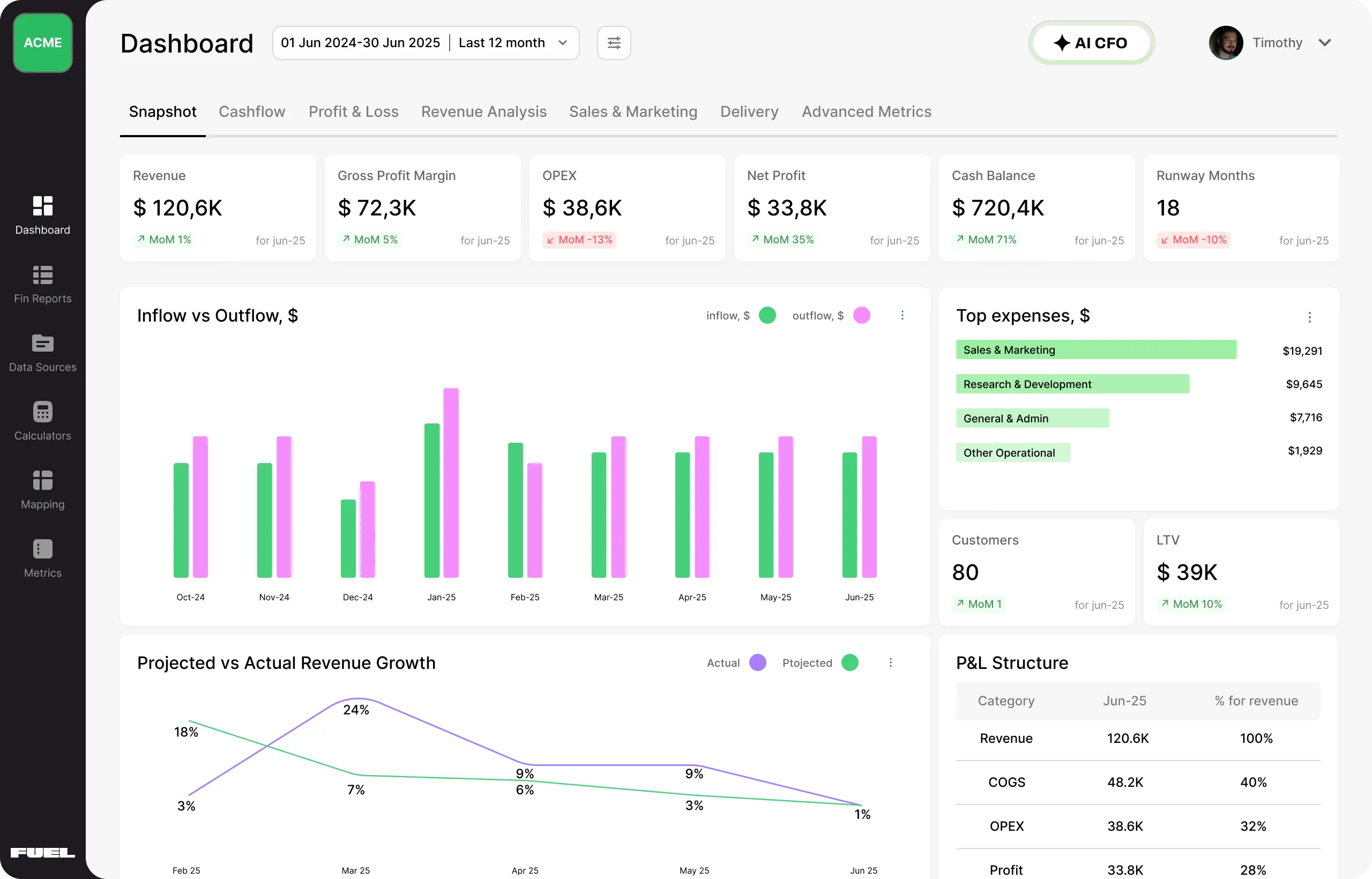
Fuelfinance

Best financial analysis software: Fuelfinance

Fuelfinance is one of the best cloud-based financial management solutions, acting as your own fractional CFO. The tool comes with unlimited support from our team of financial experts and proprietary AI CFO, which we taught to manage finances just like we've done for 500+ businesses.

Our goal is to streamline all your financial processes without the need for multiple tools. What sets Fuelfinance apart is its exceptional user-friendliness, making it accessible even for those without prior experience in financial management. For example, you can use natural language to build any custom financial dashboard you need with our powerful AI builder.

See also: Best AI for Finance: 10 Top Tools for Analysis & Automation

Here are its key features:

  • Advanced automation: No more manual paperwork, as our software takes care of it automatically. Apart from saving you time, it allows you to access your current financial information that is updated in real time.
  • Financial statements: With Fuelfinance, you get three basic financial reports: profit and loss (P&L), cash flow and balance sheet.
  • Financial planning: Fuelfinance provides financial forecasting for startups with both conservative estimates and optimistic scenarios, allowing you to plan and protect your company from unforeseen challenges in the future.
  • AI-powered forecasting: Our tool uses advanced AI technology for finance to generate accurate financial forecasts, analyze trends and provide actionable insights. You get the best of both worlds: intelligent automation plus a finance manager who understands your industry and can explain what the numbers mean for your business.
  • Unit economics: Our tool offers a straightforward method to monitor revenue, expenses and key metrics such as LTV and CAC, with the end goal of increasing your company's profitability.
  • Dashboard: You can track your financial performance with Fuelfinance's customized dashboard tailored to your business model.
  • Expert support: Our team of financial experts serves as your outsourced CFO, addressing any questions or concerns you may have. Fuelfinance expert support is limitless – we are always available to help you!

Our tool includes 350+ of third-party integrations, including QuickBooks, Stripe, Gusto, Wise, HubSpot and others, along with cheat sheets that help you understand different financial terms and simplify your financial management. It pulls data from your systems automatically, and the proactive AI flags anomalies, giving you actionable insight into what to do next, before problems arise.

While most other financial analysis software tools focus on large companies, Fuelfinance is startup-friendly, as we know that small business financial management can be even more challenging than enterprise-level due to limited resources.

We've worked with clients in all phases of their businesses, and articles on our blog can help you figure out how to do financial analysis, everything you need to know about startup financing, obtaining seed funding and many other topics that startup founders may be interested in.

See also: 8 Best AI Forecasting Tools in 2025 (Ranked & Compared)

Client stories

Fuelfinance has a 4.9 rating on G2, but here are some case studies illustrating real user results.

Case study #1

Petcube, a globally recognized company specializing in smart devices for pets, has switched from another financial software to Fuelfinance, which resulted in finding solutions that were five times more efficient and ten times cheaper. This not only boosted profitability but also gave them confidence in the future of the business.

A quote by the co-founder of Petcube

Case study #2

O0 Design, a full-stack design studio, turned to Fuelfinance to help them get in charge of their complex finances. Today, they have an impressive 2x YoY growth, attributing their success to making decisions rooted in robust, data-driven insights provided by our tool.

Case study #3

Hampton, an exclusive membership community for CEOs, reached an impressive revenue of $23 million per member. Fuelfinance successfully tracked Hampton's financial dynamics, customizing its financial reports to adapt to the evolving needs of this fast-growing business.
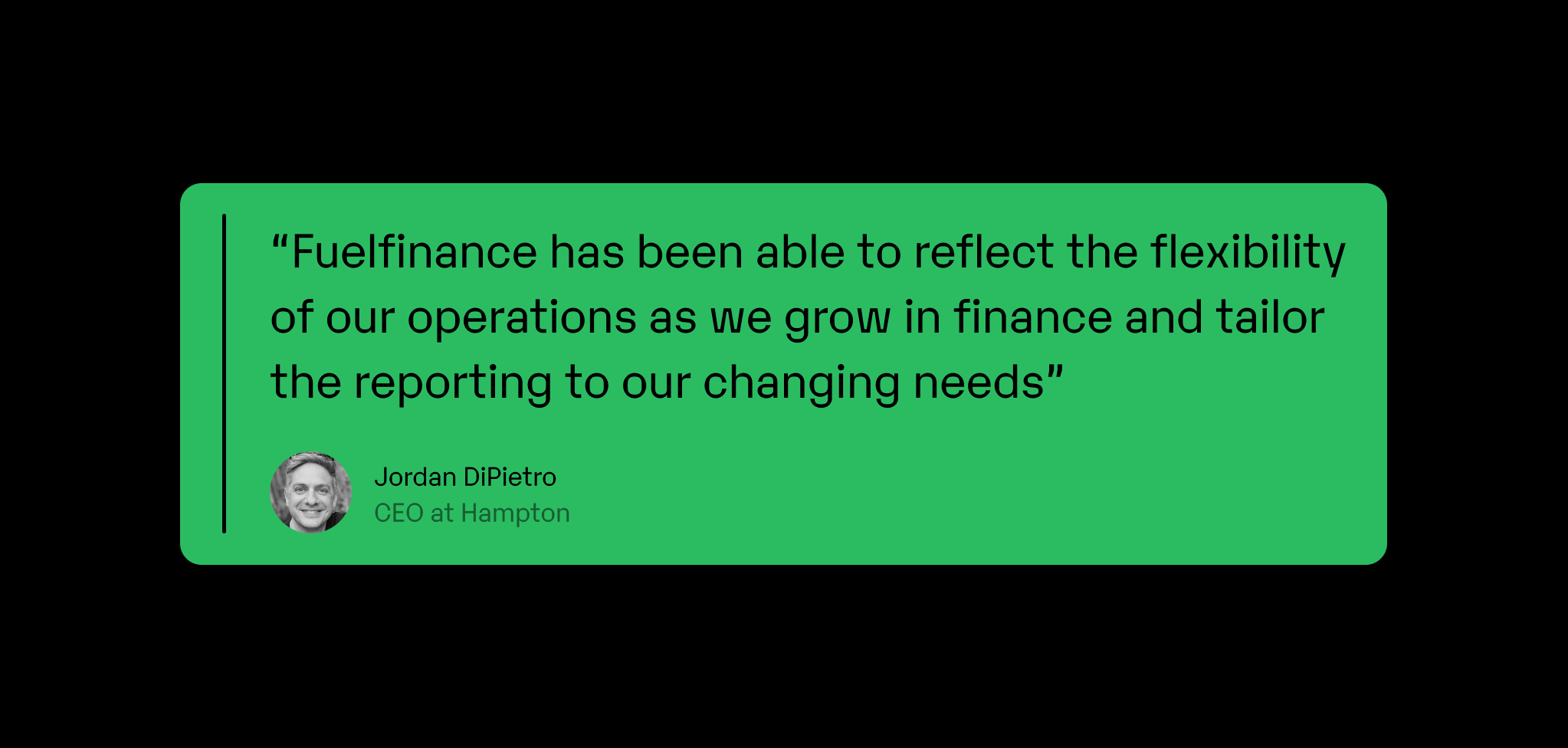
A quote by the CEO of Hampton

See also: 10 AI Financial Report Generator Tools: Get Your Report in Minutes ⏱️

Hop on a free 30-minute call with us to see how we can help you!
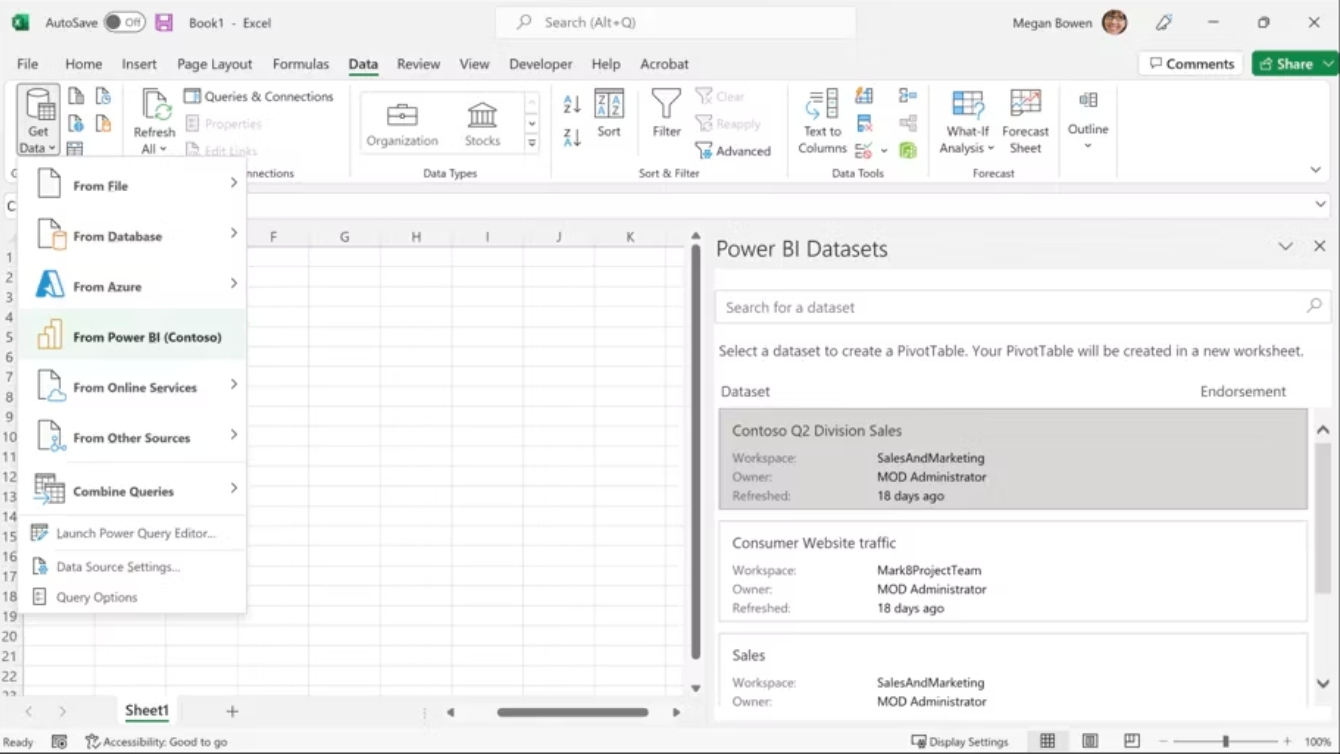
Microsoft Excel

Microsoft Excel dashboard
Source: Capterra.com

The most widely used spreadsheet editor can also serve as a financial analysis tool, especially for small businesses that don't want to purchase additional software just for their finances.

It supports many languages, from Chinese and Japanese to Hebrew and Indonesian.

Here are its key features:

  • Templates and formulas: You can effortlessly generate financial spreadsheets using templates or create custom ones, adding formulas for efficient calculations.
  • Copilot: Copilot works as financial analytics software – it identifies trends, presents what-if scenarios, offers suggestions for business improvement and compiles everything into a user-friendly dashboard for your convenience.
  • Power BI tables: You can access the business intelligence data whenever you need it through the Microsoft 365 apps.
  • Integrations: Depending on your chosen plan, Microsoft Excel integrates with apps such as Slack, Trello, Mailchimp, Jira, Asana and many more.

Microsoft Excel has a huge base of users and an overall rating of 4.7 on G2, but some users report that its interface isn't really up-to-date.

Cube 

A screenshot of the Cube dashboard
Source: Capterra.com

Cube is user-friendly FP&A software designed to help you improve financial planning and analysis by automating manual processes, reducing errors and promoting collaboration among finance teams.

It's used by freelancers, midsize and small businesses, but also large enterprises.

Here are its key features:

  • Multi-scenario analysis: Cube allows you to create precise financial projections and gain a comprehensive understanding of your finances by simulating the impact of various future factors.
  • Multi-currency support: You can evaluate your finances in both your local currency and the reporting currencies used in your financial statements, making this tool excellent for companies working internationally.
  • Role-based access: You can give access to different financial and operational data and different levels of control to your employees and stakeholders, depending on their role.
  • Integrations: Cube comes with a range of valuable integrations, including those for spreadsheets, accounting and finance, sales and marketing and so on.
  • AI forecasting and anomaly detection: Agentic AI that helps you understand the "whys" behind your finances.

The tool has an overall rating of 4.5 on G2, with some users reporting having issues with adding different integrations.

See also: Datarails Vs Cube Comparison to Help You Choose
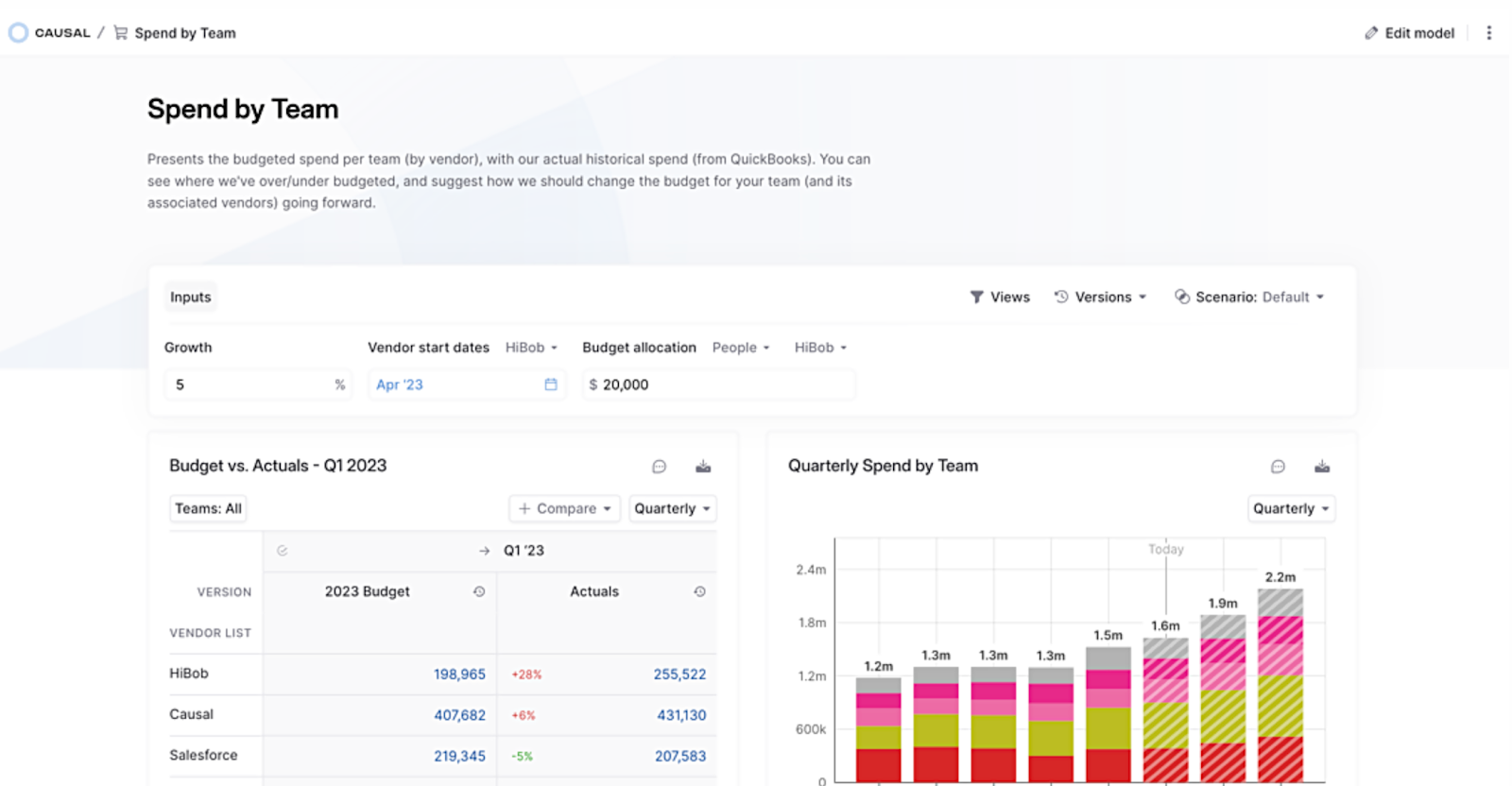
Causal

The Causal dashboard that shows spend by team
Source: G2.com

Causal is financial analysis software whose strongest feature is dynamic financial modeling. It can adapt to businesses of all sizes, and it promotes collaboration thanks to its interactive dashboards.

Here are its key features:

  • Dynamic modeling: This tool helps you develop integrated models for precise revenue projections and expense forecasts, enabling faster and more informed business decisions.
  • Automation: You can automatically monitor your model's performance against real data and compare different model versions with actuals and forecasts.
  • Interactive dashboards: This tool allows you to create visually appealing charts and tables that promote real-time collaboration among team members.
  • Integrations: Causal integrates with Stripe, Airtable, Xero, Sage Intacct and many other apps.

The tool has an overall rating of 4.6 on G2, with some users reporting that it has a somewhat steep learning curve.

Datarails

A screenshot showing how financials summary look inside Datarails
Source: G2.com

Datarails is a platform for financial planning and analysis that can be used either as an add-in for Excel or on its own. If you're used to managing your finances in Excel, the good news is that you can keep using it, but with some advanced features.

See also: Datarails Review 2026: Pricing, Limitations & the Best AI CFO Alternative

Here are its key features:

  • Financial analysis: This tool allows you to dig deeply into your financial or operational data to scrutinize anything from crucial variance drivers to headcount, sales performance, COGS and everything in between.
  • Data visualization tools: Not everyone shares the same enthusiasm for spreadsheets, so you can use graphs and charts to visualize your data and foster collaboration among all team members.
  • Scenario modeling: With this tool, you can assess how different changes in your financials may impact business outcomes so that you can anticipate potential future scenarios.
  • FP&A Genius: Conversational AI that answers questions based on your financial and operational data.
  • Integrations: Datarails supports more than 70 integrations, such as BambooHR, HubSpot, Power BI, Snowflake, Xero and many more.

The tool has an overall rating of 4.6 on G2, with users reporting that some features are unresponsive and take a lot of time to load.

See also: 10 Best Datarails Competitors & Alternatives
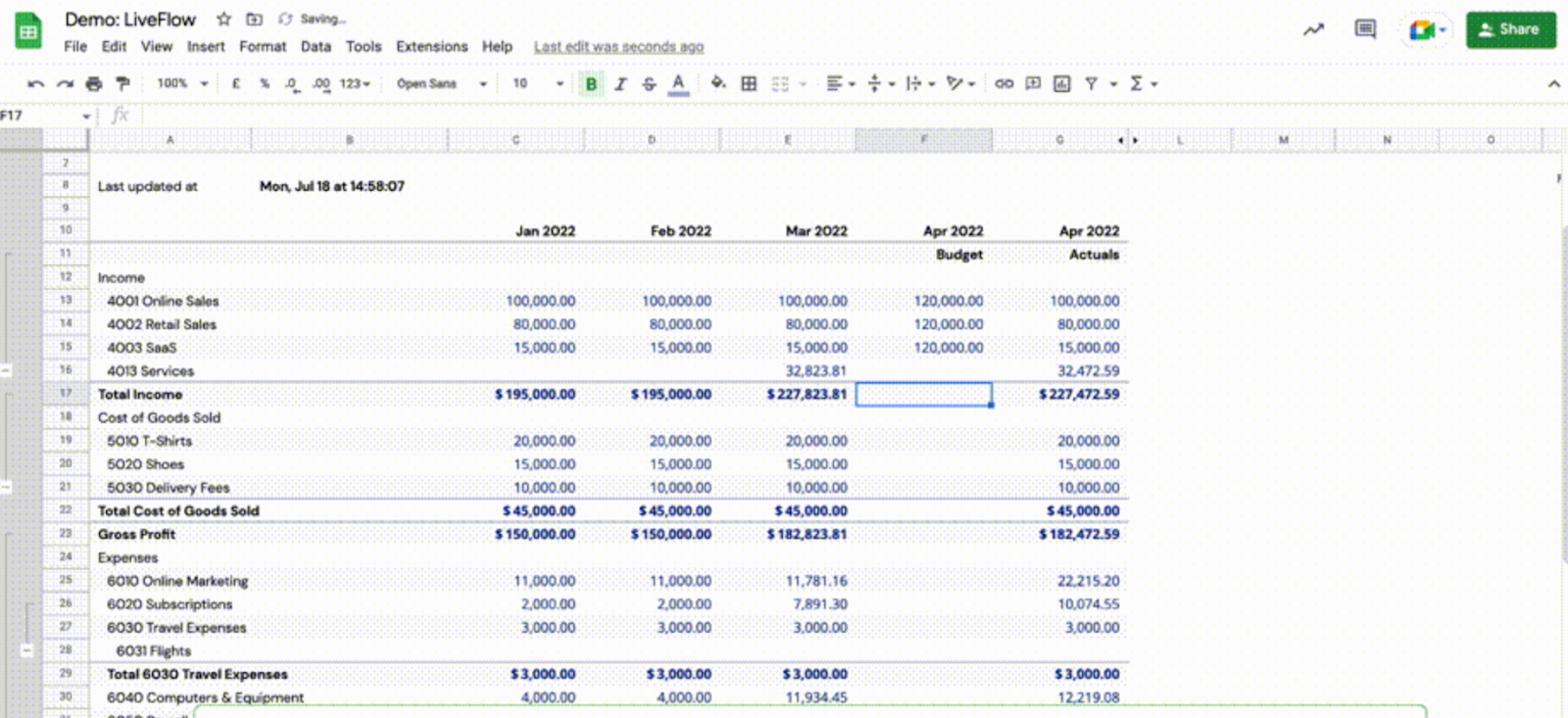
LiveFlow

Synching data between systems with LiveFlow
Source: G2.com

LiveFlow is a financial tool you can add to Excel or Google Sheets to enrich them with advanced financial analysis features without switching between the apps all the time.

This platform has various options, such as tracking your vendor spending, cash flow forecasting, revenue tracking etc.

Here are its key features:

  • Automation: When you create Budget vs. Actuals dashboards, the platform automatically updates them. It also makes financial consolidation less time-consuming, making it a popular choice among multi-entity finance.
  • Vendor spending tracker: The platform allows you to track what you're spending any time you want by using a GL account.
  • Customizable reports: You can customize your reports to a great extent based on factors like industry, metrics that interest you etc. The tool also comes with plenty of useful templates.
  • Integrations: At the moment, LiveFlow only integrates with QuickBooks, Excel and Google Sheets, but they're planning to add more integrations in the future.

The tool has a rating of 4.9 on G2 with many positive reviews, the only issue being the lack of integrations.

QuickBooks

A screenshot of the QuickBooks dashboard
Image source: G2

QuickBooks is an accounting software solution that doubles as a financial analysis tool. It's particularly well-suited for small to medium-sized businesses that need comprehensive bookkeeping alongside financial insights.

The platform offers both cloud-based (QuickBooks Online) and desktop versions (QuickBooks Desktop), giving you flexibility in how you manage your finances.

See also: Best QuickBooks Alternative for Small Businesses

Here are its key features:

  • Automated bookkeeping: QuickBooks learns how you categorize income and expenses and automatically matches and records transactions, categorizing them and detecting anomalies.
  • Invoicing and payments: You can create professional invoices, set up automatic billing for recurring customers and track late payments with personalized reminders to get paid faster.
  • Financial reporting: The platform offers over 200 customizable reports, including profit and loss statements, balance sheets, cash flow statements and budget versus actual comparisons.
  • Integrations: QuickBooks connects with over 800 third-party apps, including payroll providers, CRM systems, e-commerce platforms, and time-tracking tools.

QuickBooks has an overall rating of 4 on G2, with users praising its ease of use but noting that customer support can sometimes be slow.

See also: Financial Reporting Software for QuickBooks

Anaplan

A shot of the Anaplan homepage
Image source: G2

Anaplan is an enterprise-level connected planning platform designed for complex financial modeling and AI scenario planning. It's built for mid-sized to large organizations that need sophisticated planning capabilities across finance, sales, supply chain and operations.

The platform's strength lies in its ability to connect planning processes across different departments, creating a unified view of your business.

Here are its key features:

  • Connected planning: Anaplan allows you to link financial plans across various departments, with consolidation and reporting features.
  • Scenario modeling: You can create and compare multiple what-if scenarios in real time, helping you assess potential outcomes and make informed strategic decisions.
  • Customization and flexibility in FP&A: Anaplan offers extensive customization options, allowing you to tailor the platform to your specific business processes and requirements, with features for long-range planning, specialty financial processes, budgeting and forecasting processes.
  • Integrations: The tool integrates with major ERP systems, CRM platforms and data sources to centralize your planning data.

Anaplan has an overall rating of 4.6 on G2, with users appreciating its power and flexibility but noting that it has a steep learning curve and requires technical expertise.

See also: Best Anaplan Competitors & Alternatives
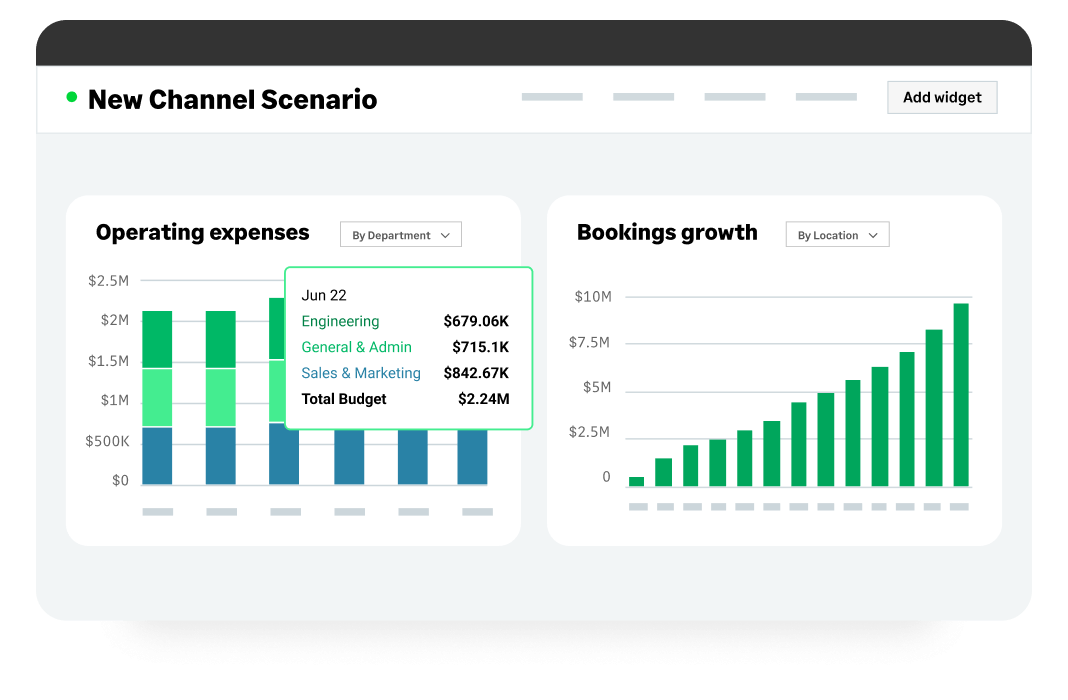
Sage Intacct

The Sage Intacct forecast growth feature
Image source: G2

Sage Intacct is a cloud-based accounting and financial management solution designed for growing businesses and midsize organizations. It's suitable for companies that have outgrown QuickBooks but aren't ready for a full enterprise ERP system.

The platform is known for its robust accounting capabilities and real-time visibility into financial performance.

Here are its key features:

  • Core financial management: Sage Intacct provides comprehensive accounting features, including general ledger, accounts payable and receivable, cash management and financial reporting.
  • Multi-entity management: You can manage multiple subsidiaries, locations or business entities from a single system, with automated consolidations and inter-company transactions.
  • Dimensional reporting: The platform offers a multidimensional chart of accounts, allowing you to track financial data by department, location, project or any custom dimension.
  • Integrations: The tool integrates seamlessly with popular business applications, including Salesforce, Bill.com, and Avalara.

Sage Intacct has an overall rating of 4.3 on G2, with users praising its flexibility and reporting capabilities but noting that customization can require technical knowledge.

See also: Sage Vs QuickBooks… or Something Else?
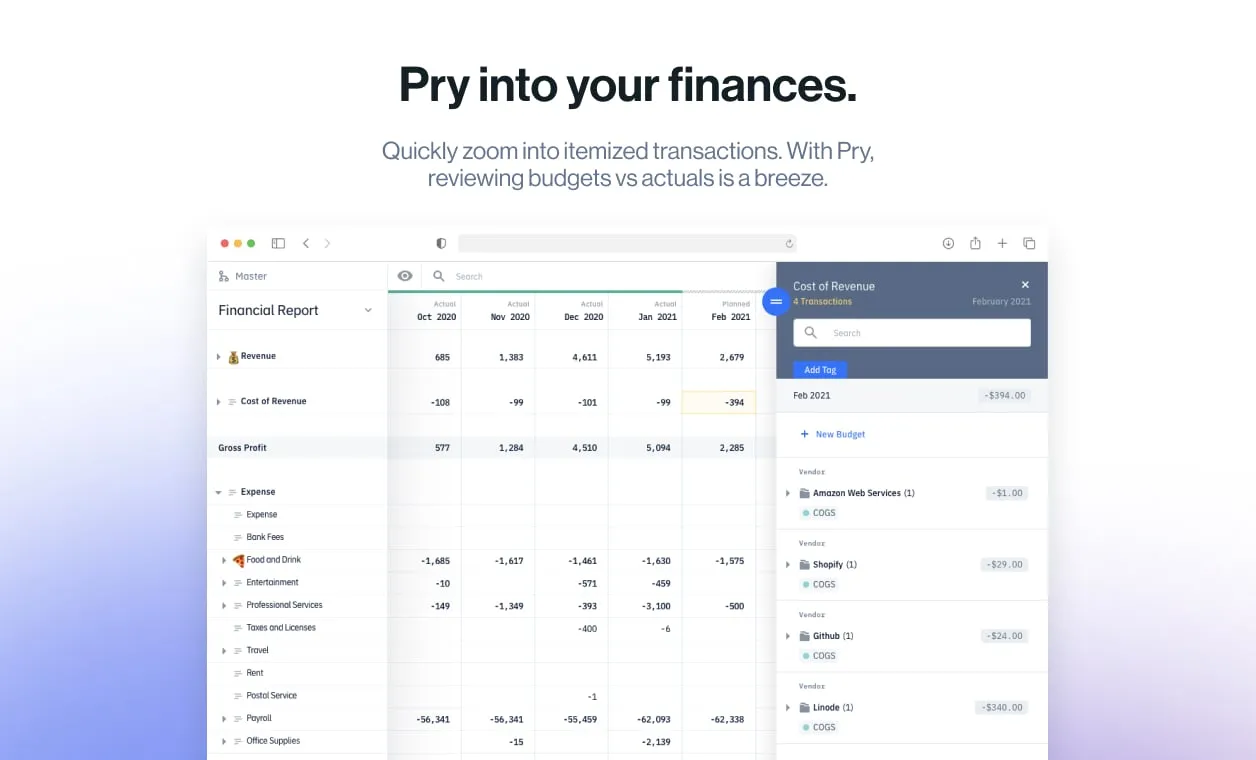
Pry

A screenshot showing how transactions appear in Pry
Image source: G2

Pry is a modern financial planning platform designed specifically for startups and small to medium-sized businesses. It replaces traditional spreadsheets with an integrated solution for budgeting, forecasting, and financial modeling.

The platform is known for its user-friendly interface and startup-friendly pricing, making sophisticated financial planning accessible to companies without dedicated finance teams.

Here are its key features:

  • Integrated bookkeeping: Pry offers basic bookkeeping capabilities alongside financial planning, allowing you to manage your accounting and forecasting in one place.
  • Scenario planning: You can create unlimited scenarios to model different business outcomes, from best-case to worst-case, and see the impact on your runway and cash position.
  • Integrations: The tool integrates with QuickBooks, Xero, various payroll providers, Stripe and bank accounts for seamless data flow.

Pry has an overall rating of 4.6 on G2 based on user reviews, with founders particularly appreciating its simplicity and the helpful support team.

Planful

A screenshot of the Planful dashboard
Image source: G2

Planful is a comprehensive financial performance management platform designed for mid-market to enterprise organizations. It focuses on streamlining financial close, consolidation and FP&A processes.

It's suitable for companies looking to move beyond spreadsheets but need enterprise-grade capabilities with easier implementation than competitors like Anaplan or Workday.

Here are its key features:

  • Financial close management: Planful automates financial close processes, task management and account reconciliations.
  • Continuous planning: The platform enables rolling forecasts, driver-based planning and dynamic scenario modeling.
  • Reporting and analytics: You can build executive-ready reports with customizable dashboards, data visualizations and drill-down capabilities.
  • Excel integration: Planful uses familiar Excel syntax and interfaces.
  • AI capabilities: Planful Predict uses AI to deliver automated forecasting and anomaly detection.

Planful has an overall rating of 4.3 on G2, with users appreciating its flexibility and Excel-like familiarity but noting that implementation can be time-consuming.

See also: Top Planful Competitors & Alternatives

Jirav

Jirav executive summary
Image source: G2

Jirav is an FP&A platform built specifically for growing businesses and accounting firms. It combines budgeting, forecasting, reporting and dashboarding in one driver-based system.

The platform is particularly popular with companies using QuickBooks, Xero or Sage Intacct who want more sophisticated planning capabilities.

Here are its key features:

  • Driver-based modeling: Jirav uses driver-based planning to create connected financial models across your income statement, balance sheet, and cash flow statement.
  • Three-statement forecasting: The platform automatically generates pro forma financials across all three statements, ensuring your projections remain balanced.
  • Budget vs. actuals: You can easily compare your performance against budget, prior year, and forecast with automated variance analysis.
  • Integrations: The tool integrates with QuickBooks, Xero, NetSuite, Sage Intacct, Gusto, and other popular business applications.

Jirav has an overall rating of 4.7 on G2, with users particularly praising its ease of use and the quality of customer support during implementation.

Best financial analysis software: Selection criteria

Here are the criteria to keep in mind when choosing financial analysis software for your startup or company.

Features

Here are the main features to look for:

  • Automation
  • Customization
  • Financial analysis
  • Financial planning
  • Unit economics
  • Financial reporting
  • Expert support

Pricing

When choosing the best solution for your company, it's essential to set a realistic budget, depending on the phase of your business.

All financial analytics tools we've mentioned offer different plans based on the number of users and other factors.

Some even have forever-free plans, but they're limited in terms of the number of users, features and integrations.

Integrations

Look for financial analysis software that integrates with the tools you're already using to avoid switching from app to app, wasting your time and possibly accidentally losing some data in the process.

The list of integrations is long, and here are some of them:

  • Banks and payment platforms like Stripe
  • Accounting software like QuickBooks
  • Spreadsheet tools like GoogleSheets
  • Other integrations, such as CRM&HR tools

Conclusion

Choosing the best financial management software is not an easy task since it depends on various factors, such as the size of your company, features and integrations you need.

Fuelfinance is an all-in-one financial software that will help you make smarter business decisions. It comes with unlimited support from our financial experts, who can serve as your fractional CFO, eliminating the additional costs of hiring consultants, bookkeepers and accountants. Plus, our sophisticated AI tools help make your finances accurate and effortless.

Schedule a free demo to discover how we can help your startup reach financial success.

FAQ

What is financial analysis software? 

It's a tool that analyzes and interprets financial data, helping you make better business decisions. It can have various features, the most common being budgeting, financial forecasting and financial statement analysis.

Which software is best for financial analysis?

There are many excellent tools on the market, but if you're looking for a comprehensive and user-friendly tool you can use for all aspects of financial analysis, Fuelfinance could be the best option for you.

Can Excel perform financial analysis?

Yes, it can do financial analysis to an extent, but today, there are plenty of tools that have more features than Excel and are more user-friendly.

Do financial analysts use SQL?

Yes, SQL is the most commonly used programming language among financial analysts.

Let's connect

Spend zero hours on manual processes

Book a 30-min demo

Just imagine how that would transform your team’s productivity and focus? Talk to our financial experts to know more.


More posts