10 Datarails Competitors: Real User Reviews & Ratings [2026]
Yuliya Datsyuk
Finance Content Lead at Fuelfinance
January 9, 2026
A recent Wolters Kluwer survey found just 6% of finance teams are currently using agentic AI; 38% plan to adopt it within 12 months. Experts mention the main advantages to be increased accuracy, fewer errors and about 26 (!) working days saved yearly. If you’re still relying on simple spreadsheets and manual workflows, you’re stepping into next-gen finance with one foot tied.
Datarails may be a familiar name in financial planning, especially for finance leaders who swear by Excel. But, let's be real — if you're a fast-moving business looking to tap into those benefits, Datarails might leave you wanting more.
Its steep learning curve, reporting issues and complexity due to siloed workspaces don't make it the best fit for businesses chasing quick and precise decision-making.
So, without further ado, let’s explore our top picks for the best Datarails competitors in the market to help you make a better choice. Our top picks are:
Fuelfinance
Anaplan
Vena
Planful
Cube Software
Prophix
Mosaic
LiveFlow
Pry
Fathom
Best Datarails alternatives & competitors for finance teams: Comparison table
Platform
Key features
G2 rating
Best for
Datarails
AI-powered chat FP&A Genius and AI Stories
Data consolidation
Data visualization
Budgeting and forecasting
Variance analysis and scenario modeling
Financial reporting
Monthly close
4.6
Mid-market and large companies focused on automating their Excel sheets
Fuelfinance
No-code dashboards that build themselves
Financial statements
Automatic updates from 350+ integrations
AI-powered financial projections/planning
Plan/Actual analysis
Unit economics
Financial consolidation
AI Copilot that answers all questions
AI anomaly detection with alerts and recommendations
Expert human support
4.9
Businesses seeking powerful, reliable AI-powered financial automation combined with expert human support
Anaplan
AI-driven scenario planning and analysis
Financial consolidation
Financial modeling and reporting
Predictive data
Connected insights across supply chain, finance, sales, marketing & HR
4.6
Large companies and enterprises with complex, multi-entity, cross-functional planning requirements
Vena
Vena Insights + AI
Vena Copilot AI for FP&A
Financial modeling and reporting
Workforce planning
Financial consolidation and close
4.5
Mid-market companies wanting to power up their Microsoft-based tools with planning and reporting
Planful
Planful Predict
Anomaly detection
AI forecasting, close, planning and consolidation
Budgeting and reporting
4.3
Companies in need of full-featured FP&A capable of handling multiple workflows
Cube Software
Microsoft Excel / Google Sheets add-on
Agentic AI for FP&A
Data consolidation and transformation
Reporting and analysis
Planning and modeling
Process and workflow management
4.5
SMBs that want to automate their Excel/Sheets workflows
Prophix
Budgeting & planning
Reporting & analytics
Financial close
Financial consolidation
Intercompany management
Integrated business planning
Account reconciliation
AI agents
4.4
Mid-market companies seeking a full-featured FP&A platform that moves beyond spreadsheets
Mosaic
Arc AI Assistant
Real-time analytics
Budgeting & forecasting
Revenue planning
Headcount planning
Cash flow forecasting
Multi-entity consolidation
Collaborative planning
Custom metrics
Dashboard & reporting
4.3
Fast-growing startups and mid-market companies that want real-time analytics, planning and dashboards
LiveFlow
Real-time data sync
Multi-entity consolidation
FinanceIQ budgeting
Automated reporting
Cash flow forecasting
Custom dashboards
Budget vs. actuals
Template library
4.9
QuickBooks/NetSuite users wanting to automate spreadsheet reporting
Pry
Budget vs. actuals
Hiring plan
Cash runway tracking
Scenario planning
KPI dashboards
Financial modeling
Unit economics
Investor reporting
4.6
Early-stage startups and founders managing cash runway
Fathom
Financial analysis
Management reporting
Cash flow forecasting
Consolidated reporting
Scenario modeling
KPI dashboards
Benchmarking
Automated alerts
Custom KPIs
4.5
Accounting firms and businesses needing visual reporting and consolidation
10 top alternatives to Datarails alternatives: Our overview
Let’s dive deeper into these options.
Fuelfinance
Fuelfinance is a powerful FP&A cloud platform built specifically for businesses and agencies ready to scale. Backed by a team of financial experts (who can serve as your fractional CFO!), it simplifies financial management with an intuitive interface, a comprehensive all-in-one dashboard and advanced AI-powered automation.
Our financial management solution's billing plans are tailored to your specific needs, ensuring you only pay for what truly supports your growth.
Fuelfinance features
Dashboard — Get a clear view of your key KPIs with a tailored dashboard designed using insights from over 600 SMBs we've worked with. Built for speed and simplicity, it lets you dig into data behind every graph while seamlessly connecting with your Google Sheets for flexibility.
Monthly updates — Receive monthly statement updates and suggestions for new flows and metrics you can integrate with existing reports and departments.
Financial projections/planning — Access regularly updated forecasts in two versions: baseline and target, to visualize both realistic outcomes and growth goals. This dual approach helps you plan confidently and prepare for any scenario with our powerful modeling.
Plan/Actual analysis — Regularly compare your financial plans with actual results to enable precise forecasting and financial analysis. This process ensures accountability and helps identify gaps, refine strategies and drive continuous improvement.
Unit economics — Compare your LTV (Lifetime Value) with CAC (Customer Acquisition Cost), make marketing and sales plans and identify non-obvious expenses.
Security and data — Ensure top-level security for your data thanks to proprietary software and SOC 2 certification.
Fuelfinance spreadsheets — Fuelfinance uses tried-and-true practices when it comes to reliability, security and data models.
AI Copilot — Our AI Copilot automates complex calculations, provides instant insights, and guides you through your financial data, saving you hours of manual work and helping you make smarter business decisions faster. Simply describe what you need, and the AI handles the rest.
AI Financial Summaries — Get clear, automated reports that translate raw numbers into easy-to-understand narratives. Instead of sifting through spreadsheets, you'll instantly know your company's health, growth trends, and potential risks.
AI Metric Builder — Create custom financial metrics without coding or advanced analytics skills. Simply describe what you want to measure, and our AI generates accurate, actionable metrics tailored to your business.
AI Forecasting — This feature delivers accurate, multi-scenario forecasts for all critical metrics, including baseline and target projections, while pulling data from over 350 sources. You can also compare forecasts against actual results for smarter decision-making.
AI anomalies detection — Automatically identify unusual patterns or irregularities in your financial data, helping you catch errors and risks before they become problems.
Integrations — Connect with 350+ other software, including Xero, Stripe, Google Spreadsheets, AWS, Gusto, Shopify, Salesforce and more. Fuelfinance also has a QuickBooks integration, making it easy to automate bookkeeping, track expenses and generate accurate financial reports in real time.
Expert support — Every Fuelfinance client gets a dedicated financial advisor who helps with problems and issues to positively contribute to their strategy.
Fuelfinance and Datarails each offer strong features, but they serve different types of businesses — and how they approach finance is where the real difference lies.
Datarails is built for enterprises and finance teams who live and breathe Excel. It automates reporting and consolidates data, but staying tied to spreadsheets can feel limiting — especially for businesses looking to simplify and streamline financial processes through modern automation.
Fuelfinance, on the other hand, goes beyond software, giving you a dedicated financial expert who acts as your fractional CFO, helping you manage cash flow, forecast growth and make confident decisions without the guesswork. Datarails offers support, too, but it leans more toward technical setup than ongoing strategic advice.
The user experience also sets these platforms apart. Fuelfinance's modern dashboard provides real-time updates from a single source of truth and lets you focus on what matters most, while Datarails, as an Excel add-on, is better suited for spreadsheet enthusiasts.
What truly differentiates our financial management solution is its advanced AI capabilities. The AI Copilot, financial summaries, metric and dashboard builder and anomaly detection transform how agencies interact with their financial data, eliminating hours of manual work and making sophisticated financial analysis accessible to non-finance professionals. These AI-powered features enable you to spend seconds, not days, collecting data to make decisions — something traditional Excel-based platforms simply can't match.
At its core, Fuelfinance is for companies ready to embrace a smarter, more agile way to manage their finances and company growth activities. Plus, we do let you connect our dashboard with spreadsheets if that's the way you prefer to work, while still benefiting from the other Fuelfinance advantages.
If Fuelfinance sounds like the better choice for your needs, book a demo. Our team will guide you through the options and help you find the perfect solution to manage your company's growth activities.
Fuelfinance ratings
G2: 4.9 (37 reviews)
Capterra: 5.0 (39 reviews)
Source: G2
Anaplan
Source: Anaplan
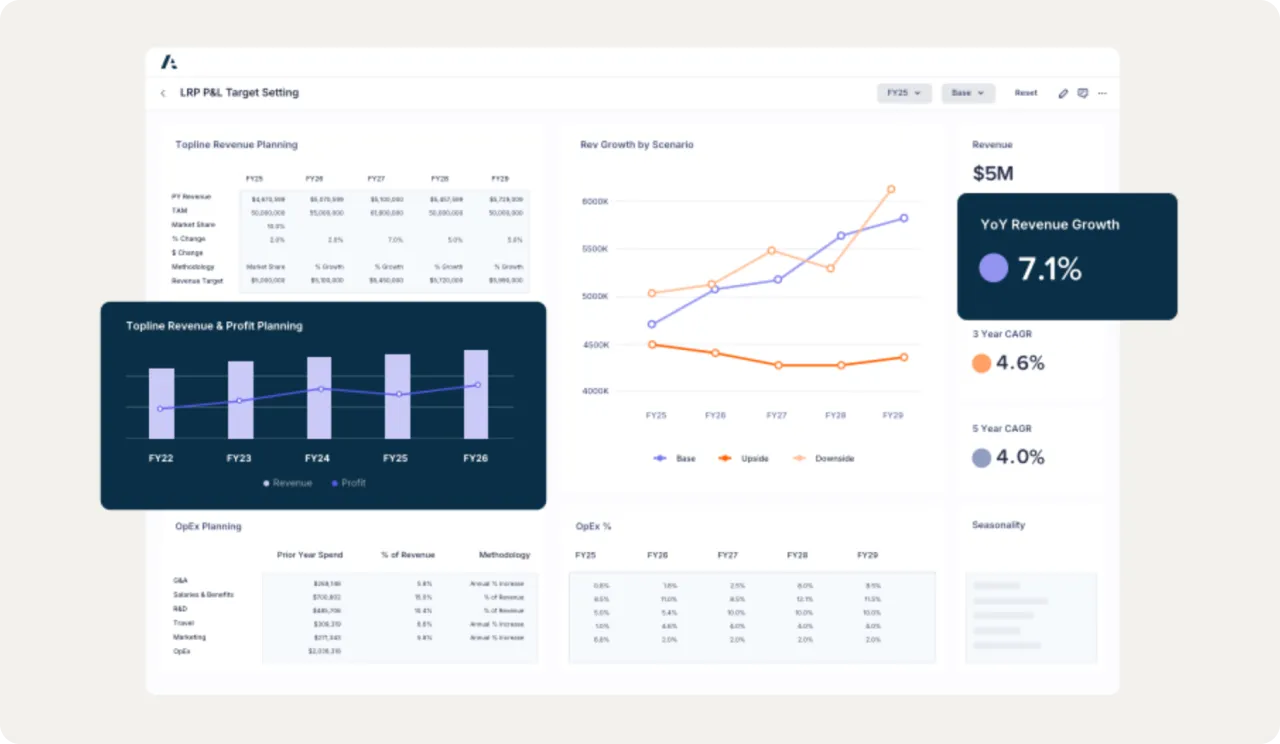
Anaplan is a comprehensive cloud platform for unifying corporate performance management, financial planning and analysis. This cloud-based solution was designed for organizations and businesses of various sizes (though it's tailored to enterprises) and can be used for many purposes, including revenue planning, headcount planning, OpEx planning etc.
Anaplan features
Connected planning — Users can create reports illustrating various areas of business supply chain operations and build plans. They can also easily share their work with others.
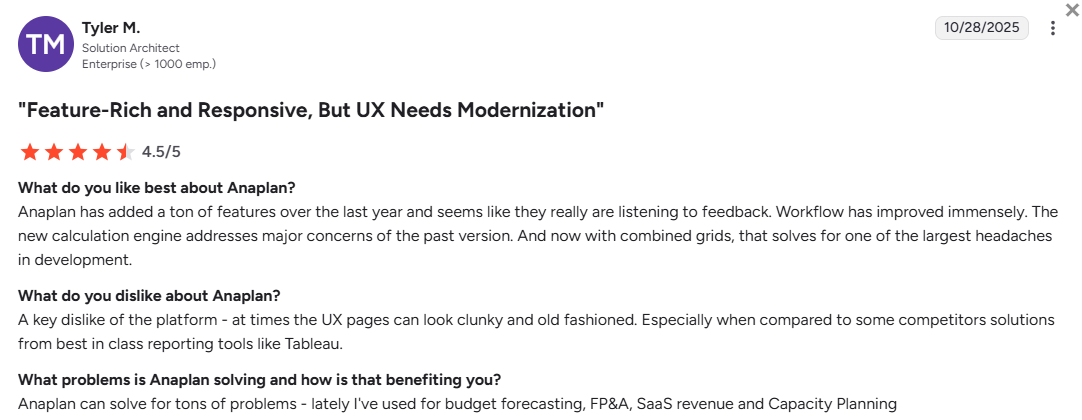
User experience — Allows for sharing user experience data across the entire organization in real time to drive informed decisions.
Anaplan Intelligence — Provides insights and recommendations using machine learning capabilities, predictive and generative AI.
Planning & modeling — Users can create multi-dimensional models for complex business scenarios, with consistency across changes.
Extensibility — Offers integrations, data transformation/orchestration, APIs, and purpose-built applications to collect and unify data from multiple sources.
Enterprise scale — Built to scale across thousands of users, large models and global entities, with enterprise-grade security, compliance and governance.
Security — Ensures proper security thanks to BYOK compliance, data encryption, SSO, roles, user management etc.
Predictive insights and analytics — Users can access a self-serve platform with AI capabilities, unlimited financial modeling and real-time insights
How Anaplan compares to Datarails
While both Anaplan and Datarails are support financial planning, their approaches and target audiences differ significantly.
Anaplan is engineered for enterprise-scale, cross-functional, complex planning environments with a focus on modelling sophistication, modelling scale and integration across business units.
Datarails is oriented toward finance organizations that rely heavily on Excel/spreadsheets and need automation/reporting enhancements with less overhaul of modeling infrastructure.
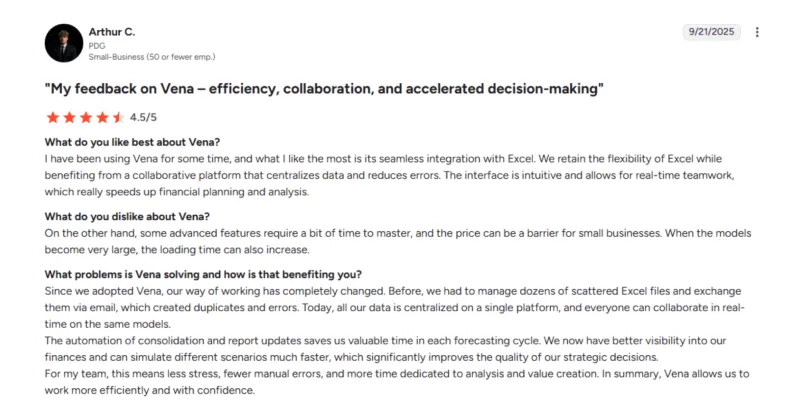
Vena is an agentic AI-powered complete FP&A platform, purpose-built to amplify the Microsoft technology ecosystem. It automates financial planning, repetitive tasks and optimizes business performance through native Microsoft 365 integration and advanced AI capabilities.
Vena Copilot for Microsoft TeamsA — Integrates agentic AI directly into Teams meetings, chats, and channels, bringing FP&A expertise into real-time workflows.
Vena Analytics Agent — An agentic AI that runs complex variance and trend analyses, powers scenario simulations, and delivers real-time actionable insights.
Vena Planning Agent — Integrates into Excel for driver-based planning and predictive forecasting.
Vena Copilot for FP&A — Leverages OpenAI's GPT-4 combined with Vena's CubeFLEX analytical data model, pre-trained on hundreds of common FP&A questions for natural language queries.
Vena Insights — Intelligent reporting and analytics solution using embedded Microsoft Power BI with AI and machine learning for predictive analytics, anomaly detection, self-service analytics, and real-time dashboards.
Modeling — Automate data aggregation and integration, analyze information from multiple dimensions (supply chain, departments, etc.), and align decisions across your organization.
Workflows — Users can map processes, eliminate bottlenecks, automate report sends, track progress and set up task reminders.
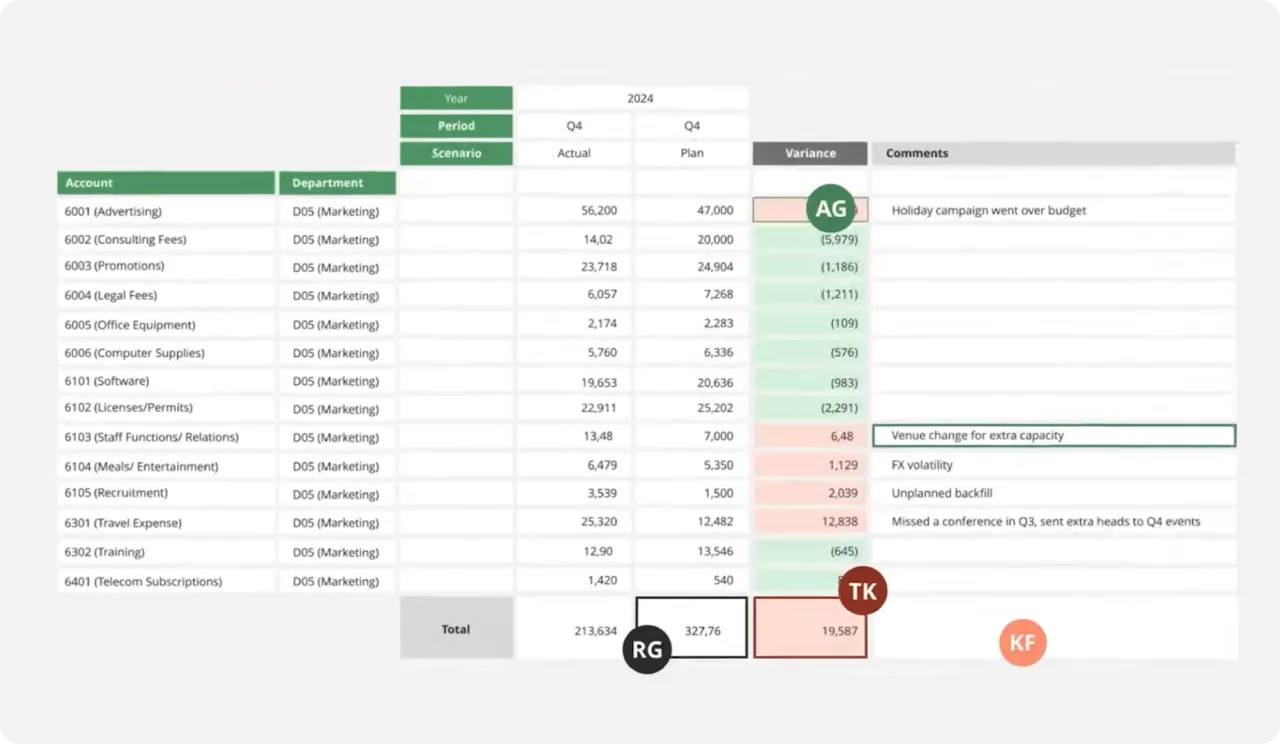
Collaboration — Vena enables teamwork with its collaborative planning tools, allowing multiple users to work together on budgets, forecasts and reports within the familiar Microsoft Excel interface.
How Vena compares to Datarails
Both Vena and Datarails use Excel as a foundation, but with different approaches and focuses.
Vena offers native Excel integration with seamless two-way data syncing between Excel and source systems, while Datarails uses an Excel add-in that requires toggling between tools. Vena is powered by advanced agentic AI (Vena Copilot with GPT-4, Analytics Agent, Planning Agent), purpose-built for FP&A, while Datarails offers FP&A Genius, a conversational AI tool.
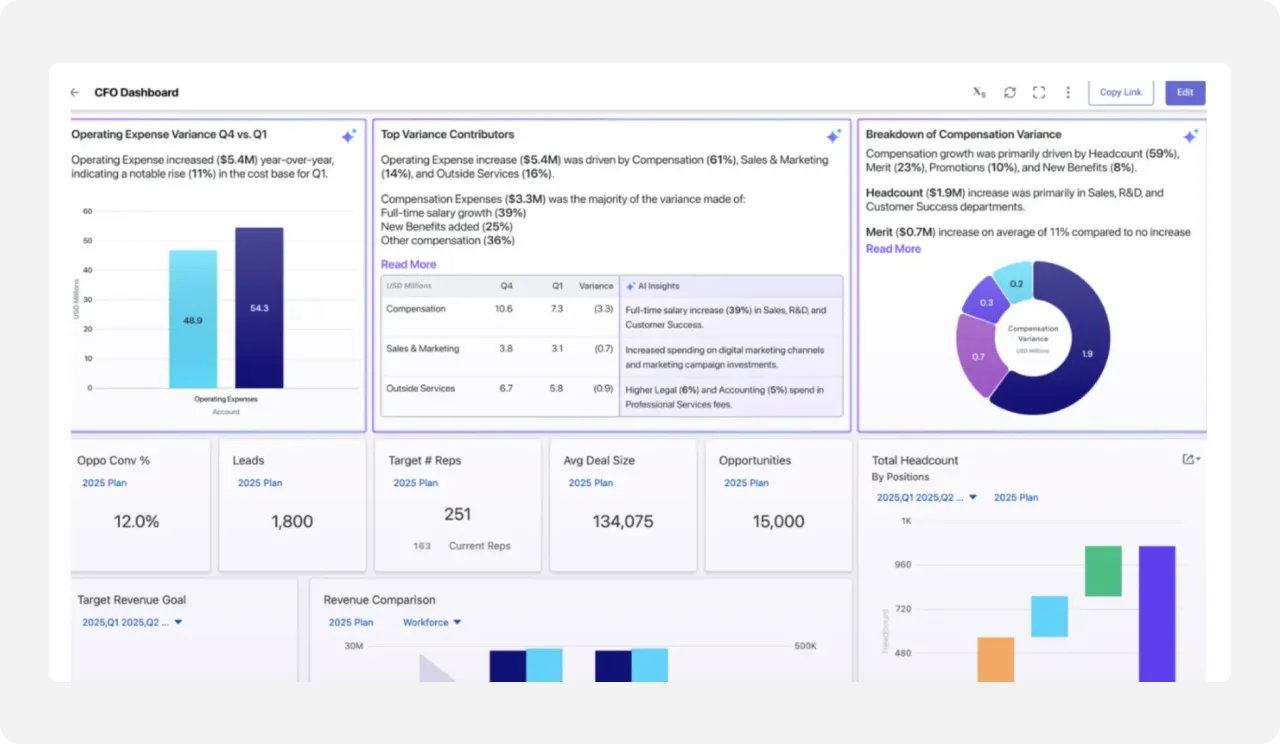
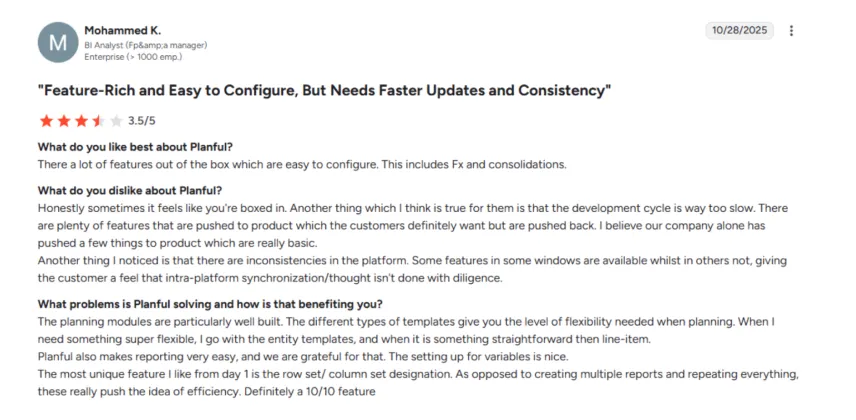
Planful is a cloud-based financial performance management solution designed for comprehensive planning, reporting, forecasting, consolidation and analytics. It supports processes across finance, accounting, sales, HR and other departments, offering tools for business-wide planning and continuous performance management.
Planful features
Planful AI Assistants — Analyst, Planner, Controller, Modeler and Admin, responding to plain-language prompts to deliver instant insights and automations.
Planful Predict — AI/ML capabilities integrated throughout the platform to detect anomalies, review multiple data points, flag risks and build scenarios.
Speed and agility — Pre-built forecasting templates enhanced with native AI to eliminate guesswork, boost accuracy, reduce errors, and deliver results fast while aligning with your tech stack for smooth implementation.
Collaboration — Collaborate on forecasting, build comprehensive plans with stakeholders, monitor realization, and track changes and deviations across departments.
Rolling forecasts — Monitor critical business metrics in real-time and modify plans as the business environment changes.
Driver-based forecasting and analytics — Offers advanced financial planning tools to extend your runway, optimize cash and gain more insights regarding cash balances.
Consolidations — Visual organization charts, automated eliminations and currency conversion, support for sub-consolidations, non-controlling interest, and group consolidations.
How Planful compares to Datarails
Planful and Datarails are both financial planning tools but serve different business needs and market segments.
Planful offers a comprehensive suite of persona-based AI assistants powered by OpenAI and Planful's patented calculation engine, delivering explainable, role-specific insights. Datarails offers FP&A Genius, a ChatGPT-style conversational AI chatbot that provides quick answers to financial questions with accompanying dashboards and visualizations.
Planful is a comprehensive cloud-based CPM platform designed for larger medium sized businesses and enterprise companies looking to manage financial consolidation, multi-dimensional planning, advanced workflows, and complex ownership structures across departments. It's best suited for organizations that need a unified system for planning, budgeting, forecasting, reporting and consolidation without relying heavily on spreadsheets.
Datarails is built around Excel, making it a great fit for small to mid-sized businesses that prefer to stay within the spreadsheet environment while adding automation and reporting capabilities. It's typically more accessible for teams that want to enhance their existing Excel-based processes rather than replace them entirely.
Planful ratings
Source: G2
G2: 4.3 (465 reviews)
Capterra: 4.3 (75 reviews)
Cube Software
Source: Software Advice
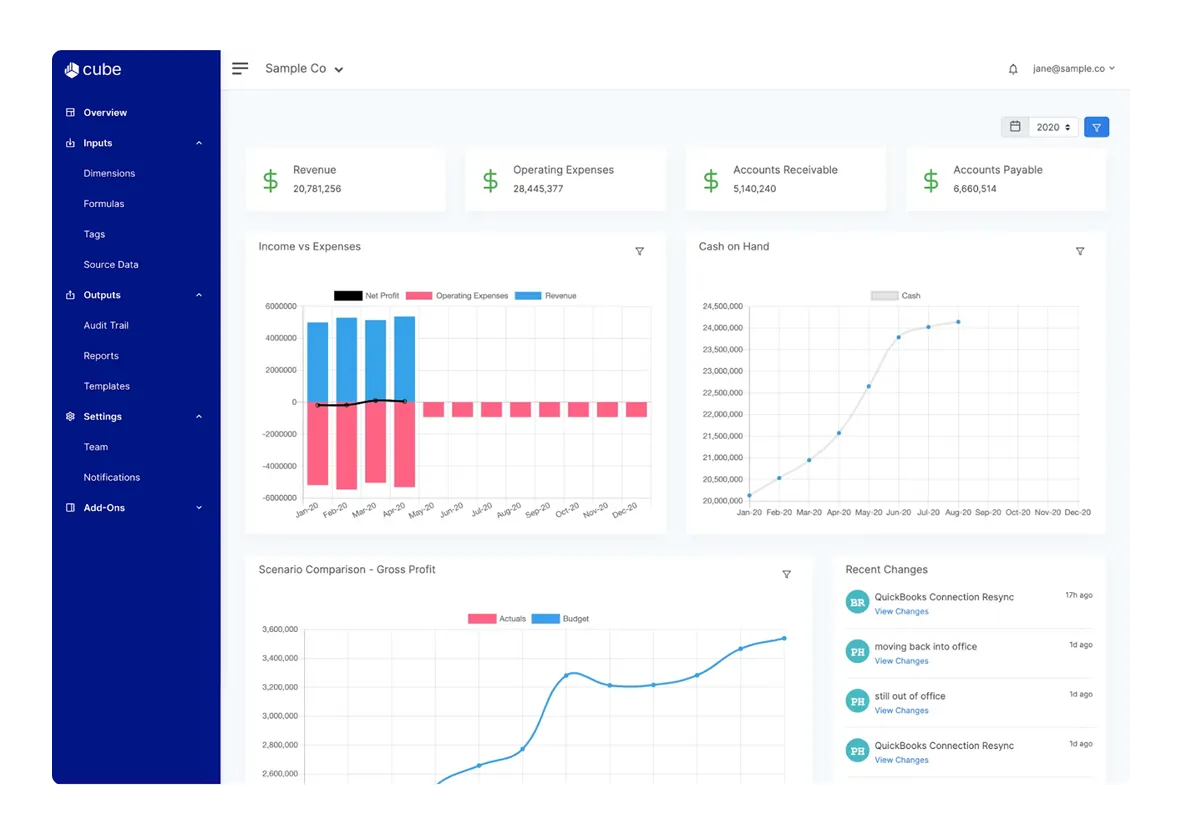
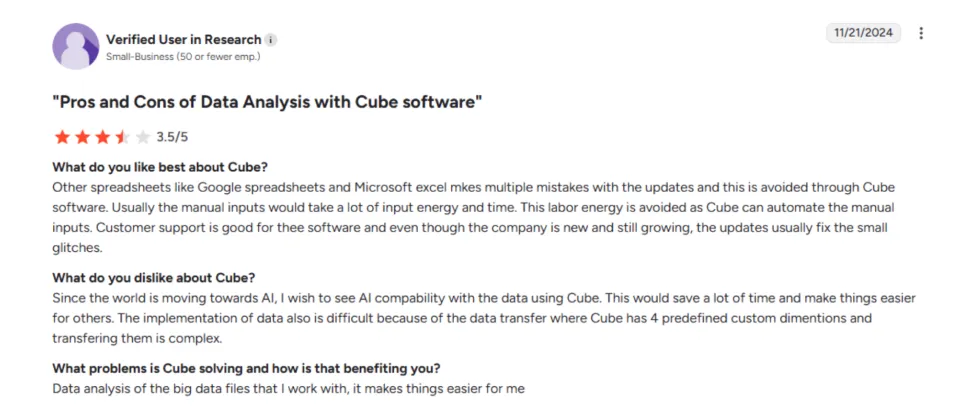
Cube is a no-code, spreadsheet-native FP&A platform built for finance teams that work in Excel and Google Sheets. It connects directly to your accounting systems and business tools, allowing you to pull live data into the spreadsheets you already use without manual imports or version control headaches. Designed for small to mid-sized businesses, Cube combines the familiarity of spreadsheets with enterprise-grade planning capabilities and AI-powered collaboration.
Cube features
Cube AI Analyst — Query and analyze financial and operational data using natural language directly in Slack, Microsoft Teams or your Cube Workspace.
Smart Analysis — AI automatically flags key variances, identifies drivers and generates clear narrative context.
AI Forecasting — Accelerate baseline forecasts using historical data and trends, with conversational mapping that translates plain-English commands into mapping rules.
Connect — Automatically pull data from your ERP, CRM, HRIS, and other business systems into Excel or Google Sheets in real time.
Calculate — Build and maintain financial models with formulas, calculations and custom metrics that update automatically as your data changes.
Control — Maintain data integrity with workflow approvals, audit trails, and permissions that ensure accuracy and accountability.
Collaborate — Enable cross-functional collaboration by letting teams work in the same spreadsheet environment without breaking formulas or creating version conflicts.
Microsoft Excel / Google Sheets — Work within your existing spreadsheet tools while benefiting from centralized data and automated workflows.
Report builder — Create customizable financial reports and dashboards that refresh automatically with your latest data.
Dashboard creator — Build interactive dashboards with charts, tables, and key metrics to share insights across your organization.
How Cube compares to Datarails
Both Cube and Datarails serve finance teams that want to keep Excel at the heart of their planning, but they differ in focus and flexibility. Cube integrates with both Excel and Google Sheets and emphasizes speed, collaboration and ease of use. Its Agentic AI adds conversational forecasting and variance analysis within Slack and Teams. Datarails focuses solely on Excel, offering FP&A Genius for real-time, AI-driven insights and rich built-in dashboards with full spreadsheet flexibility.
Cube suits small to mid-sized teams seeking quick setup and agile automation, while Datarails fits growing mid-market companies with complex Excel models needing deeper reporting and scalability.
Cube ratings
Source: G2
G2: 4.5 (122 reviews)
Capterra: 4.6 (78 reviews)
Prophix One
Source: Prophix One
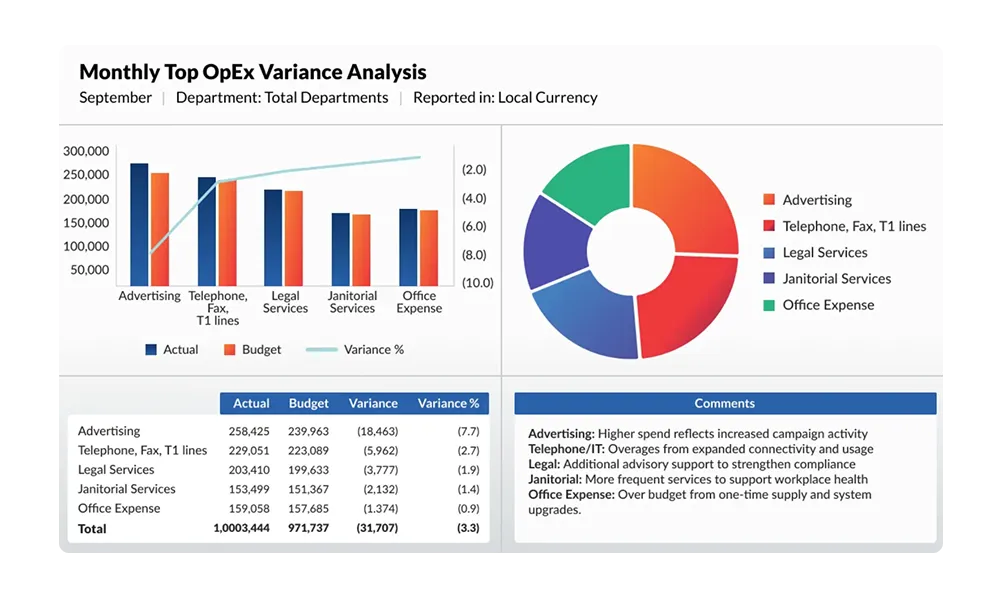
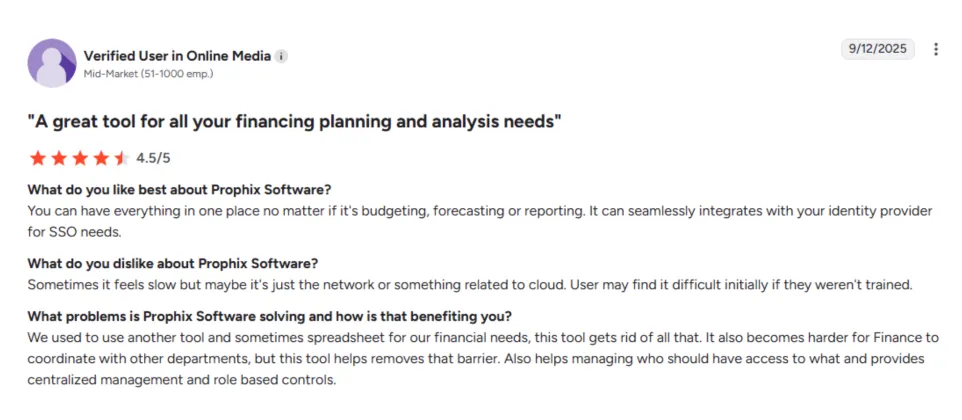
Prophix One is a financial performance platform designed for growing finance teams. It combines AI, automation and intuitive technology to simplify financial planning, budgeting, forecasting, reporting and consolidation.
Prophix features
Autonomous AI Agents — Budgeting, Reporting and Modeling agents that autonomously execute tasks like validations, approvals, report generation and financial models.
Prophix Copilot — Natural language AI assistant for conversational interaction with financial data and insights.
Prophix One FP&A Plus — Advanced application for accelerated analysis, planning and decision-making with budgeting & planning, reporting & analytics, financial close, financial consolidation.
Solutions Marketplace — Pre-built templates, workflows and data connectors for faster implementation.
Intercompany management — Includes integrated business planning and account reconciliation.
Enterprise-grade security — With role-based access, encryption and compliance certifications.
How Prophix compares to Datarails
Datarails is an Excel-native FP&A platform that enhances spreadsheet workflows with automation, data connectivity, and Genius their generative AI assistant. Prophix One is a standalone platform with autonomous AI capabilities designed to replace spreadsheet-based processes entirely.
If you want to enhance existing Excel workflows with AI-powered automation, Datarails is better. If you're ready to transition to an autonomous finance platform with AI agents that execute tasks independently, Prophix One is the stronger choice.
Prophix ratings
Source: G2
G2: 4.4 (212 reviews)
Capterra: 4.6 (121 reviews)
Mosaic
Source: Mosaic
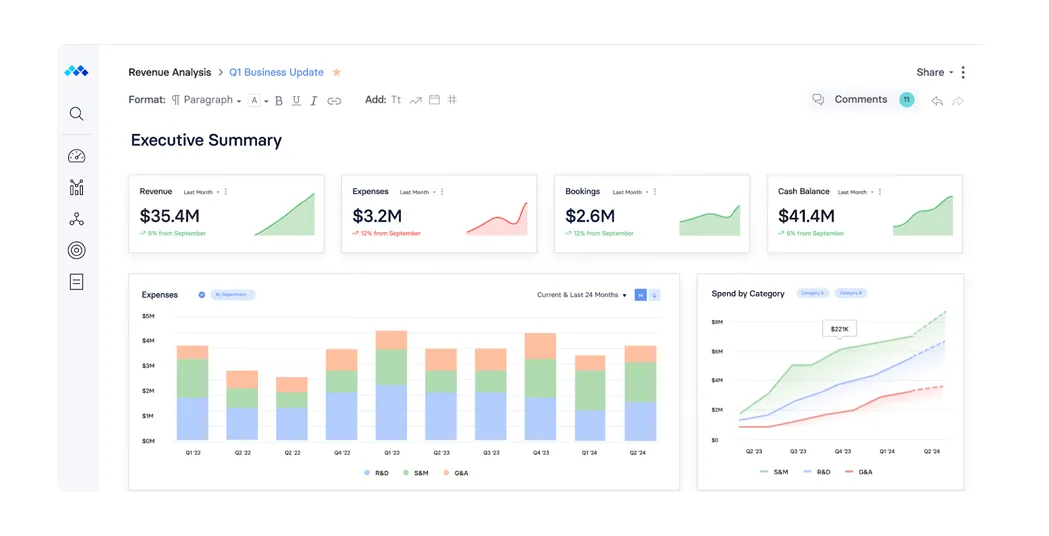
Mosaic is a strategic finance platform designed for fast-growing startups and mid-market companies. It consolidates financial and operational data from across your tech stack into a central database to provide real-time insights, automated reporting and comprehensive planning capabilities — all in one unified platform.
Mosaic features
Arc AI Assistant — Ask Arc to identify performance drivers, summarize trends and generate board-ready reports using chat-based prompts for instant insights.
Real-time analytics — Access up-to-date financial data with automatic syncing from your ERP, CRM, HRIS and billing systems.
Budgeting & forecasting — Control spend with budgeting across any dimension, including vendors, departments and projects, with unlimited scenario planning.
Revenue planning — Includes integrated sales and revenue planning tools that connect financial targets to operational execution.
Headcount planning — Forecast the fully loaded costs of current and future employees with automated data from your HRIS.
Cash flow forecasting — Find efficiencies and control burn with direct and indirect cash flow forecasting capabilities.
Multi-entity consolidation — Consolidate multiple entities, eliminate FX differences and handle intercompany adjustments automatically in minutes.
Collaborative planning — Invite business partners to forecast their expenses and headcount with built-in workflows.
Custom metrics and dashboards — Automate metrics and analysis with pre-built metrics, templates, customizable charts and visualizations.
How Mosaic compares to Datarails
Datarails is Excel-native, designed for teams that want to enhance their spreadsheet workflows without changing how they work. It's good for finance professionals who are deeply invested in Excel and want automation layered on top.
Mosaic is a cloud-native platform that moves teams away from spreadsheets entirely. It consolidates data across systems, provides real-time visibility and offers advanced scenario modeling and forecasting. Mosaic is built for companies that want a modern, integrated financial operating system rather than an Excel enhancement tool.
If your team lives in Excel and wants to stay there, Datarails is the better choice. If you're ready to move beyond spreadsheets and embrace a unified strategic finance platform, Mosaic offers significantly more power and scalability.
Mosaic ratings
Source: G2
G2: 4.7 (215 reviews)
Capterra: 4.7 (57 reviews)
LiveFlow
Source: LiveFlow
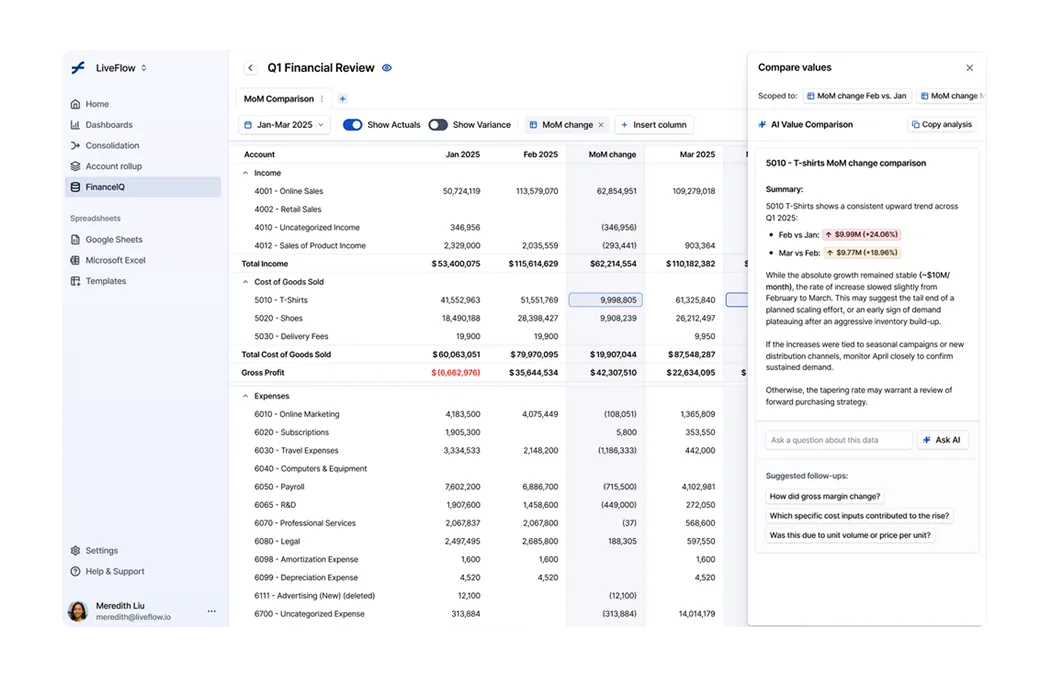
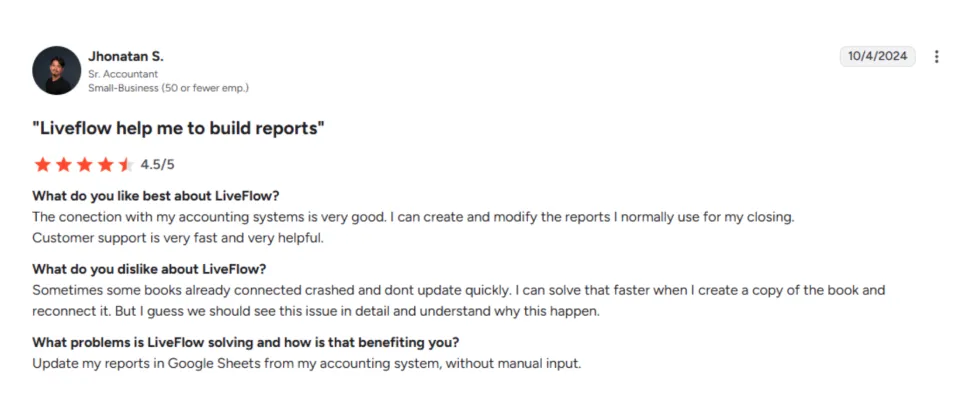
LiveFlow is a financial reporting automation platform designed for QuickBooks Online and NetSuite users. It eliminates manual data exports and spreadsheet updates by connecting your accounting software directly to Google Sheets and Excel, enabling real-time financial reporting and multi-entity consolidation.
LiveFlow features
Real-time data sync — Automatically pull financial data from QuickBooks Online or NetSuite into Google Sheets or Excel with continuous updates.
Multi-entity consolidation — Consolidate any number of entities with flexible account mapping, multi-currency support and department/location consolidation in minutes.
FinanceIQ budgeting — It embeds accountability and control directly into the financial planning process with department ownership and built-in workflows.
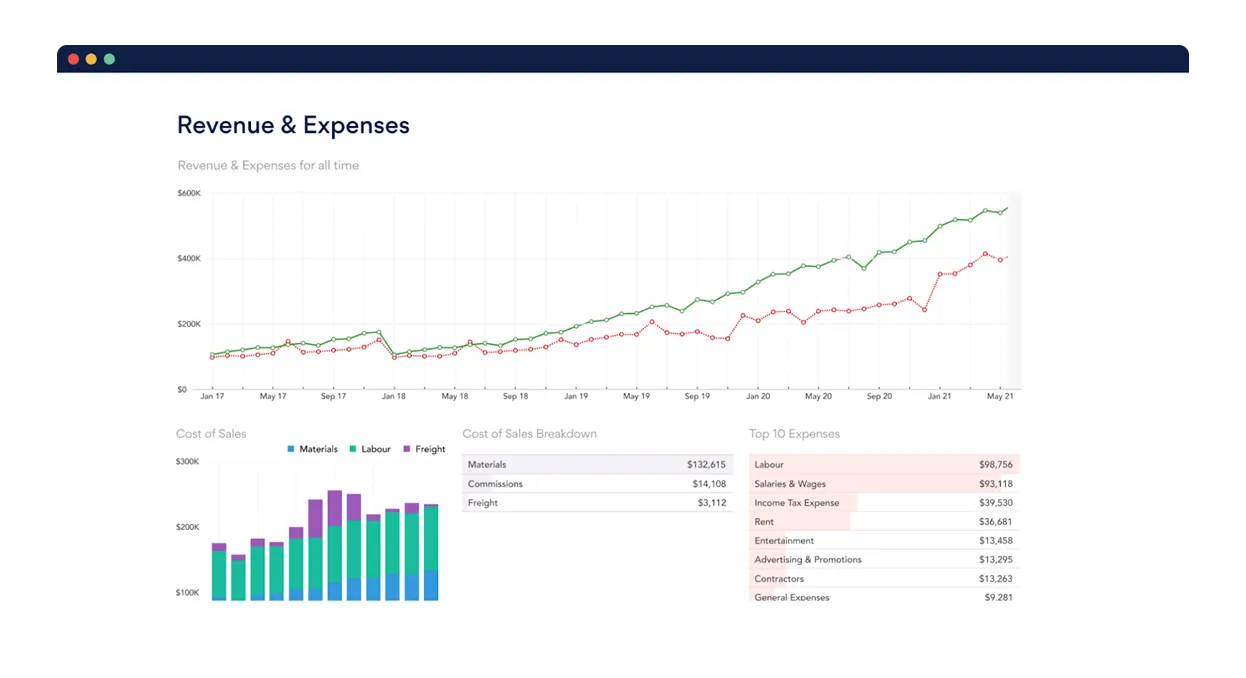
Automated reporting — Create and schedule financial reports that update automatically.
Cash flow forecasting — Accurately project cash flows using current financial data for precise business projections and runway planning.
Custom dashboards — Design intuitive financial dashboards with customizable KPIs and visualizations without technical skills.
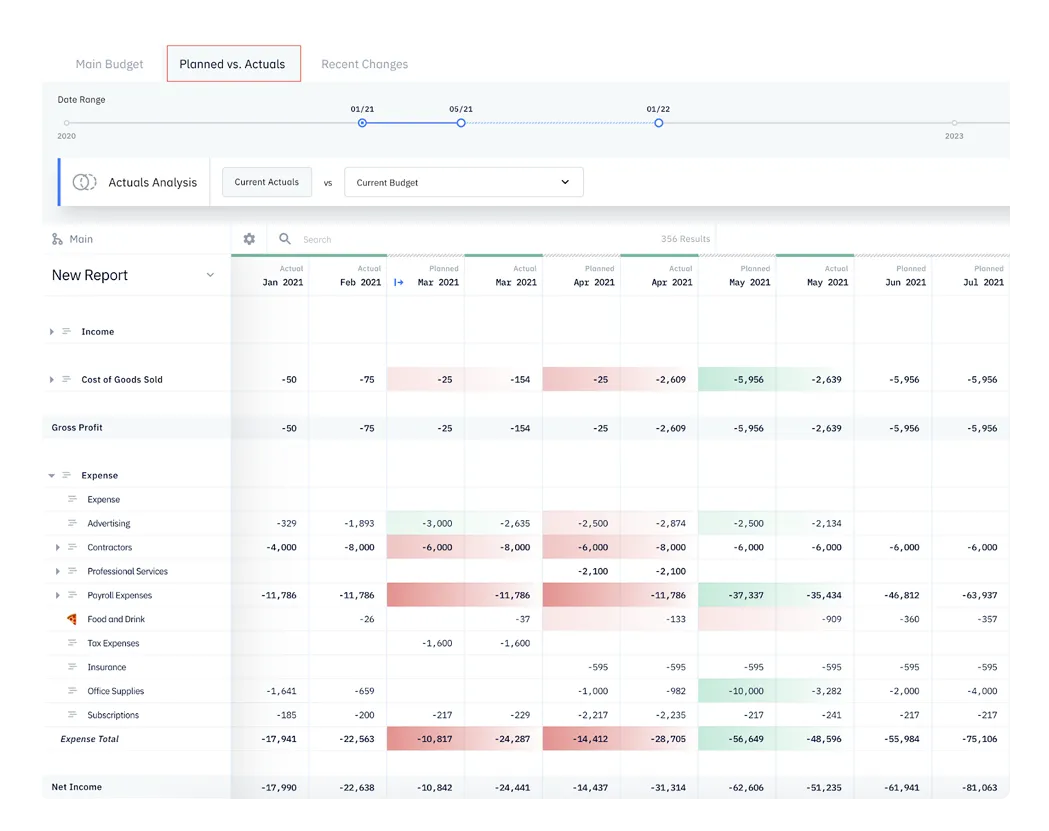
Budget vs. actuals — Transform financial tracking into strategic foresight by instantly comparing budgets to actuals and spotting variances.
Template library — Access pre-built financial report templates, including P&L statements, cash flow statements and customizable balance sheets.
Drill-down capabilities — Click through to transaction-level details without switching between systems for deeper analysis.
SOC 2 compliance — Enterprise-grade security with TLS encryption and minimal data contact.
How LiveFlow compares to Datarails
LiveFlow and Datarails both focus on enhancing spreadsheet-based financial workflows, but they serve different needs and use cases.
Datarails is designed as a comprehensive Excel-native FP&A platform with extensive consolidation, visualization and planning capabilities. It's built for finance teams that want an all-in-one solution for budgeting, forecasting and reporting while staying in Excel.
LiveFlow takes a more targeted approach, focusing specifically on automating the connection between accounting systems (QuickBooks Online and NetSuite) and spreadsheets. It eliminates manual data entry and speeds up the monthly close. LiveFlow is better for teams that have well-established financial models in Excel or Google Sheets and simply want to automate data refresh and consolidation.
If you need comprehensive FP&A functionality with advanced planning features, Datarails is the better choice. If your primary pain point is manual data imports and you want to keep your existing spreadsheet models, LiveFlow is a faster solution.
LiveFlow ratings
Source: G2
G2: 4.9 (300 reviews)
Capterra: 4.9 (92 reviews)
Pry
Source: Pry Financials
Pry is a financial planning platform for early-stage startups and small businesses. It can work as your first alternative to Excel when you need to think about managing your budget, cash runway and hiring plan without hiring a full-time finance person.
Pry features
Budget vs. actuals — Monitor spending in real-time with automatic syncing from your bank accounts, credit cards and accounting software for instant variance analysis.
Hiring plan — Manage your team and plan for new hires with headcount forecasting that tracks salaries, benefits and fully loaded employee costs.
Cash runway tracking — Always know how many months of runway you have left with visual cash flow projections based on your current burn rate.
Scenario planning — Compare different financial situations and model "what-if" scenarios to prepare for fundraising, pivots or strategic decisions.
KPI dashboards — Track key metrics and performance indicators with customizable dashboards designed for investor updates and board meetings.
Financial modeling — Build pro forma financials with custom formulas and driver-based models without the complexity of traditional spreadsheets.
Unit economics — Understand your unit economics by tracking customer acquisition cost (CAC), lifetime value (LTV) and other key SaaS metrics.
Bank connections — Connect to your bank accounts for automatic transaction imports and categorization.
Integration with payroll & accounting — Sync with QuickBooks, Xero, Gusto and other tools to keep your headcount and expense data automatically updated.
How Pry compares to Datarails
Pry and Datarails target completely different audiences and solve different problems.
Datarails is built for established finance teams at mid-market companies with complex consolidation needs and want to enhance their Excel-based workflows with automation and advanced reporting.
Pry is for founders and early-stage startups that need to manage their finances without a dedicated finance team. It's simpler, more affordable and focused on the specific needs of pre-Series B companies: tracking runway, planning for hiring and preparing for fundraising.
Pry can be up and running in hours with minimal training, while Datarails requires more implementation time and support.
Pry ratings
Source: G2
G2: 4.6 (29 reviews)
Capterra: 5.0 (19 reviews)
Fathom
Source: Fathom
Fathom is a financial analysis and management reporting tool designed to help businesses, accountants and advisors monitor performance, create professional reports and forecast with confidence. It transforms accounting data into clear, insightful visualizations and is particularly popular with accounting firms managing multiple clients.
Fathom features
Financial analysis — Get in-depth analysis with pre-built financial KPIs to track profitability, cash flow, growth and performance against budgets or targets.
Management reporting — Create professional, branded reports with customizable charts, tables, financial statements and commentary using a simple drag-and-drop editor.
Cash flow forecasting — Confidently plan your financial future with three-way forecasting across P&L, Balance Sheet and Cash Flow statements.
Consolidated reporting — Consolidate multiple entities with intercompany eliminations, multi-currency support and group financial statements for organizations with multiple subsidiaries.
Scenario modeling — Evaluate different financial scenarios and answer "what-if" questions with driver-based forecasting and scenario analysis.
KPI dashboards — Track performance with customizable dashboards that display key metrics, trends and variances.
Breakdown analysis — Analyze performance by tracking categories, departments, locations, jobs or classes to understand profitability across different areas.
Benchmarking — Compare and rank multiple companies or clients against each other to identify top performers and improvement opportunities.
Automated alerts — Get notified when KPIs exceed thresholds, such as cash reserves dropping below a certain level.
Custom KPIs — Create custom metrics with your own formulas to track business-specific performance indicators alongside standard financial ratios.
How Fathom compares to Datarails
Fathom and Datarails both serve the financial reporting and analysis market, but with different strengths and target users.
Datarails enhances Excel-based workflows for in-house finance teams, with features designed around consolidation, budgeting, forecasting and automated reporting.
Fathom is particularly strong for accounting advisors and firms managing multiple clients, as well as businesses that need presentation-ready financial reports. It has solid visual analysis, KPI tracking and report creation that non-finance stakeholders can easily understand.
Fathom's three-way forecasting is more visual and intuitive, while Datarails offers deeper integration with Excel models and workflows. Fathom also has strong multi-client management capabilities that make it ideal for accounting practices serving multiple small business clients.
Fathom ratings
Source: G2
G2: 4.6 (31 reviews)
Capterra: 4.8 (20 reviews)
Features and services every financial planning software should have
The key features a financial analysis solution should include are:
Specialized software streamlines and fits different purposes, but to use it fully, you usually need to connect it to other tools. Here are some integrations you should look for in an FP&A platform:
Accounting software, such as QuickBooks or Xero
Human resources tools
Customer relationship management systems
Payment systems
Project management solutions
Suitability for your business needs
Evaluate whether the software aligns with your business's size, industry and specific financial goals. Choose a solution that supports your workflows, scales with your growth and addresses your unique operational challenges.
Ready for financial peace of mind?
Financial planning and analysis might seem complicated, but it doesn't need to be this way. Datarails is just one possible tool you can use to simplify things, but there are better options.
A powerful, user-friendly FP&A solution with strong reporting capabilities that combines modern finance, AI and expert human support like Fuelfinance will help you streamline financial operations and overcome various hurdles that inevitably await all founders.
With Fuelfinance, you'll create financial models and forecasts that help you avoid running out of cash (the ultimate founder nightmare), scale confidently and spot opportunities before your competitors do. Plus, you'll finally ditch those hours spent updating spreadsheets manually — it's all automated with our advanced AI capabilities.
Want to check Fuelfinance out? Contact us to book a demo.
FAQs
Is Datarails a good company for unifying corporate performance management?
Yes, it has a 4.6 rating on G2. Based on the user ratings, the software can be considered good, but there are alternatives to Datarails that can be better for businesses looking for a modern, user-friendly solution with more comprehensive AI features and solid support, tailored to their unique needs, such as Fuelfinance, Anaplan, Cube, Vena Solutions, Prophix software, Mosaic, LiveFlow, Pry, Fathom, and others not mentioned in the article, like Workday Adaptive Planning, for example.
How much does Datarails cost?
Datarails doesn't offer pricing information on its website. Pricing is usually customized based on company size and needs.
What is Datarails used for?
Datarails is an FP&A software platform for Excel users. It allows you to automate processes, such as data consolidation, reporting, planning etc.
Does Datarails work with Google Sheets?
Yes, you can use Google Sheets as well as Excel as the source for your reports.