See The New Fuel Live Recording

%20%2B%20Best%20Tools.webp)
Most of what's packaged under AI financial modeling isn't modeling at all. It’s forecasting. Trend extension. Automated math. Helpful, yes — but nowhere close to replacing the reasoning, judgment and collaboration that the financial modeling process actually requires.
So let’s reset the conversation.
AI financial modeling is usually an AI system that can understand business logic, ask questions, synthesize unstructured data, perform risk assessment and guide you through building financial models the way a human financial manager would. That system does not exist today. Not in our product, not in anyone else’s. If someone tells you it does, they're lying.
Still, AI is already reshaping how finance teams work. AI-powered tools like Fuelfinance improve forecasting accuracy, reduce manual effort, and pull real-time data automatically from unstructured data sources. But forecasting ≠ modeling — and that distinction matters if you want reliable, accurate planning.
In this article, we'll break down what AI can actually do in finance right now, what it cannot, and where AI-driven models are heading. We’ll also explain where Fuelfinance fits into that future: combining AI capabilities with human financial analysts to deliver the best of both worlds.
AI financial modeling refers to something far more complex than generating projections. A real modeling process builds a logical blueprint of how a business works: revenue drivers, cost structures, operational dependencies, growth timelines and cash flow behavior.
Today, AI cannot build these complex models. It does not understand the fundamentals of your business. It does not ask the clarifying questions a financial analyst would. It does not understand missing data points or challenge unrealistic assumptions.
That doesn't mean you should disregard AI algorithms in your financial projections, though.
Today’s AI-powered models excel at one thing: forecasting based on existing data. They can apply machine learning algorithms, deep learning and data science techniques to reveal patterns in historical performance. They can ingest unstructured data from financial markets. They can generate multiple what-if projections using real-time data and up-to-date information.
But that’s not the same as building a financial model.
Traditional models depend heavily on human reasoning: understanding unstructured data, spotting inconsistencies, linking assumptions and interpreting how operational choices affect future performance. No AI technology today can match that.
Financial modeling is not simply “input number, get output.” It’s a structured thinking exercise.
A real model builder must determine:
This requires reasoning about unstructured data sources, understanding operations and challenging optimistic assumptions — something AI cannot yet perform effectively.
Current AI capabilities can calculate but cannot think. And financial modeling depends on thinking.
That’s why, today, financial analysts, finance leaders and FP&A experts still build financial models manually. AI can accelerate the modeling process by reducing manual effort, but it cannot replace human oversight.
While true AI modeling doesn’t exist yet, AI can dramatically improve parts of the workflow.
Here’s what AI effectively supports.
Machine learning algorithms and deep learning techniques can analyze historical records, detect patterns and extend trends. This improves forecasting accuracy and produces a solid starting point for scenario analysis.
AI-powered tools can run simplified “what if” scenarios:
But these are surface-level changes — not the construction of a complex model.
AI can pull information from unstructured data sources across financial markets, CRMs, ERPs, billing systems and accounting platforms. It can highlight anomalies, consolidate data points and ensure information stays up to date.
AI's ability to detect inconsistencies, spot unusual activity and flag potential risks helps finance leaders avoid surprises and improve financial health.
AI technology automates data collection, cleaning, categorization and processing, allowing human analysts to focus on reasoning instead of mechanical tasks.
But none of this means AI is building financial models on its own.
With all that in mind, here's a list of the top tools that help make finance professionals' jobs that much easier with AI-powered and natural language processing risk management, predictive analytics and scenario planning.
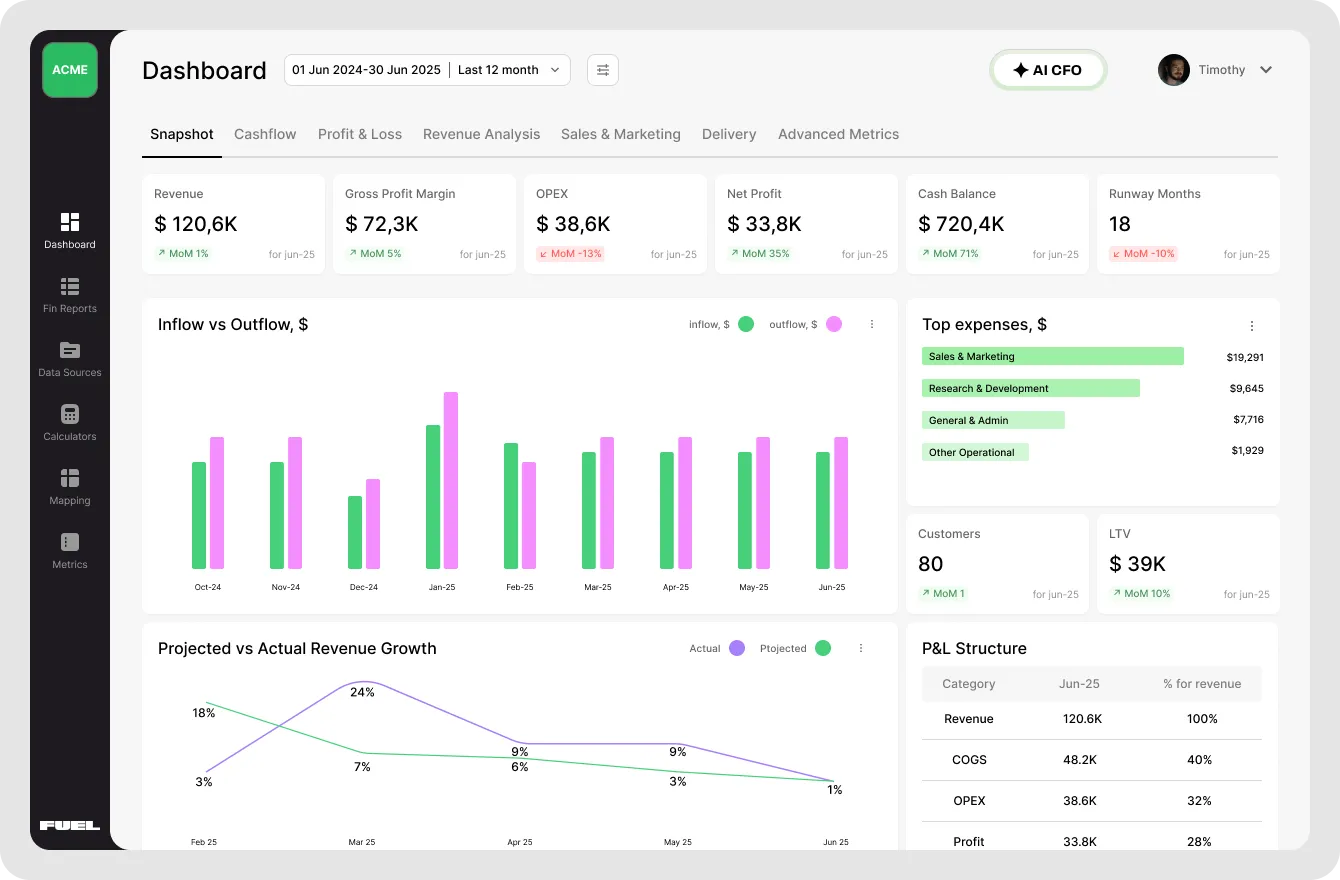
What it is: Fuelfinance is a cloud-based financial management platform that combines AI-powered automation with dedicated human financial expertise — think of it as your complete outsourced financial services team in one package.
Who it's best for: SMBs, agencies and professional services firms that want sophisticated financial management without hiring a full-time outsourced CFO.
Standout features:
What makes it different: The AI can forecast, run scenarios and spot anomalies. But building a complete financial model requires reasoning, questioning assumptions and understanding your business deeply. That's why Fuelfinance pairs AI features with a dedicated financial manager who actually knows how to build and validate models, guiding the entire process. We combine time-consuming data entry with expert analysts who know how to build complex models, validate assumptions and protect financial health. AI accelerates the work; humans ensure it makes sense.
You get the speed of AI with the judgment of an experienced fractional CFO who won't let you present an unrealistic budget to your board. This hybrid approach gives companies a more reliable and strategic system than any fully automated AI tool today.
Implementation: Even as little as two weeks. No insane setup costs or lengthy integration projects.
Sign up for Fuelfinance to see how AI combined with human expertise transforms your financial operations.
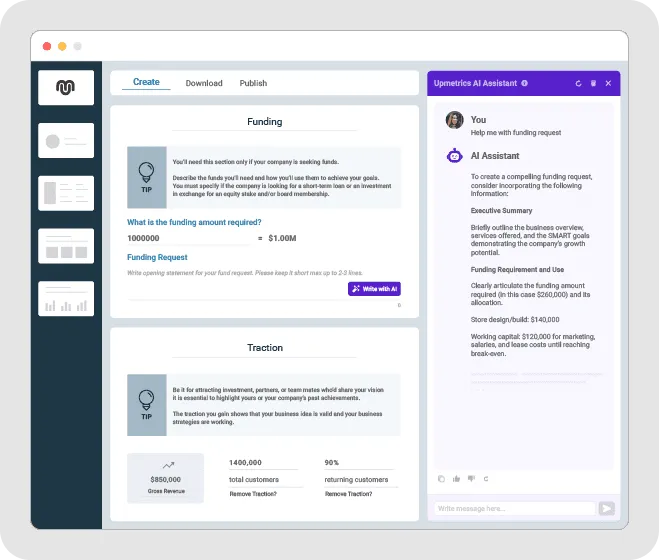
What it is: A business planning and financial forecasting platform focused on startups and small businesses.
Who it's best for: Early-stage startups building their first financial projections for investor presentations.
Standout AI modeling features:
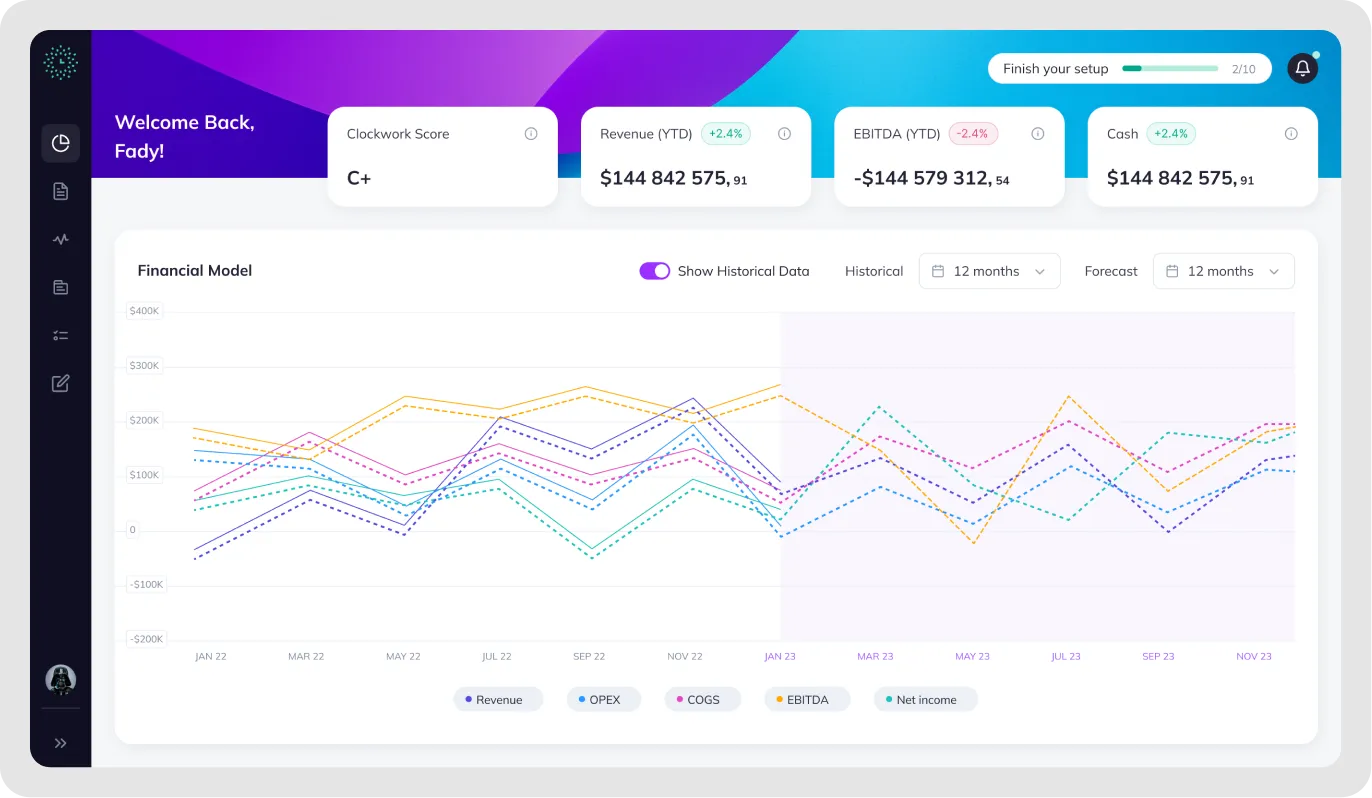
What it is: A financial intelligence platform that focuses on automated reporting and analysis for finance teams.
Who it's best for: Mid-market companies looking to automate their month-end close and reporting process.
Standout AI modeling features:
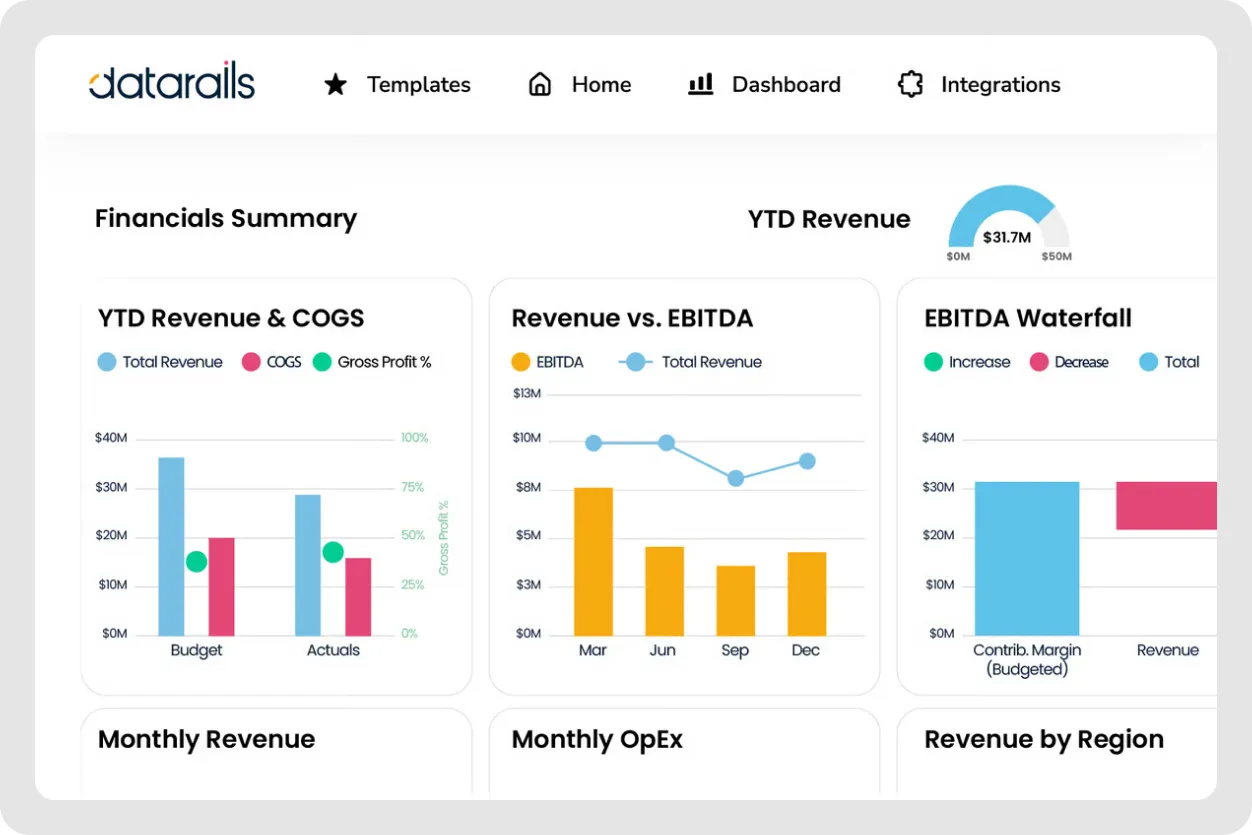
What it is: An Excel-based FP&A platform that adds automation and consolidation on top of your existing spreadsheets.
Who it's best for: Finance teams that refuse to leave Excel but need better consolidation and automation.
Standout AI modeling features:
Check out our detailed Datarails competitors comparison to see how it stacks up or read our in-depth Datarails review.

What it is: An enterprise-grade financial planning platform that combines Excel with a centralized database.
Who it's best for: Larger enterprises ($50M+ revenue) with complex consolidation needs across multiple entities.
Standout AI modeling features:
We've written a comprehensive Vena competitors guide if you're evaluating enterprise options.

What it is: A comprehensive FP&A and consolidation platform designed for mid-market and enterprise companies.
Who it's best for: Finance teams at companies with $100M+ revenue looking for a complete planning, budgeting and reporting solution.
Standout AI modeling features:
See our Planful competitors analysis for more context on enterprise financial planning tools.
Let's treat AI financial modeling as a future where AI becomes a real partner in building financial models, guiding decisions and interpreting the business. But we’re not there yet.
Today’s tools — including Fuelfinance — are powerful AI forecasting systems that use machine learning algorithms, deep learning techniques and data consolidation to automate parts of the workflow. They reduce manual effort and surface insights, increasing forecasting accuracy.
But human analysts still perform the reasoning-heavy modeling process that AI can't do.
If you want a system that combines the speed of AI with the judgment of experienced finance leaders, Fuelfinance is the most complete solution today.
Not really. ChatGPT can help with simple sales forecasts or expense budgets, but it can't create a full financial model.
ChatGPT is great for brainstorming model structure or explaining financial concepts. But building a real financial model requires connecting revenue assumptions to hiring plans, linking COGS to sales volume and making sure your cash flow actually ties to your balance sheet. That's beyond what a chatbot can handle reliably.
The bigger issue? Financial models risk hallucinations where AI fabricates numbers or assumptions with confidence, and most models lack audit trails to trace how outputs were generated.
If you're serious about financial modeling, use dedicated tools that integrate with your actual data or work with platforms like Fuelfinance that combine AI forecasting with human financial managers who know how to build proper models.
Absolutely. Deloitte committed $3 billion to AI solutions and partnerships with tech giants like Google and NVIDIA, while PwC dedicated $1 billion to expand AI capabilities.
EY is rolling out as many as 150 different AI agents to 80,000 tax professionals globally, while Deloitte's finance agents are projected to liberate thousands of hours per year and slash costs by up to 25%.
But here's what matters for you: the Big 4 use AI to handle routine tasks like document processing, compliance checks and basic analysis. The complex work (strategy, judgment calls, interpreting results for clients) still requires human expertise.
AI financial modeling is more accurate for pattern recognition and trend forecasting, but only when it's paired with human oversight.
AI can't question unrealistic assumptions or understand your business context the way a human can. It won't flag that your 300% growth projection assumes you'll magically triple your team overnight without additional costs.
Best practice: Use AI for data analysis and forecasting, but have an experienced financial manager review and validate the outputs. That's why Fuelfinance's approach combines AI automation with dedicated financial expertise.
It depends on what you're replacing. If you're moving from Excel to a platform like Fuelfinance with good integrations, you can be operational fast. Most of our clients start seeing value within the first week.
Enterprise implementations like Planful or Vena? Plan for 3-6 months minimum. You're not just installing software — you're changing processes, training teams and migrating years of financial data.


Just imagine how that would transform your team’s productivity and focus? Talk to our financial experts to know more.