See The New Fuel Live Recording


Here's a reality check that might sting a little: "While a modest 55 percent majority of small business owners in the US rate themselves as high on the financial literacy scale, one in two entrepreneurs have actively faced fiscal challenges that arise from a lack of it, including 15 percent who say they haven't gotten back on their feet."
If you're reading this while juggling spreadsheets, wondering if you're making the right financial decisions, or secretly panicking about your cash flow at 2 AM — you're not alone. Running a business is hard enough without feeling like you need a finance degree to make sense of your numbers.
But here's the thing: financial planning for business owners isn't just about surviving tax season. It's about making smarter decisions that help you scale faster, sleep better and actually enjoy building your business instead of constantly worrying about money. Financial stability is what it is.
In this guide, we'll walk through everything you need to know about creating a comprehensive financial plan without hiring a six-figure CFO. You'll learn practical strategies that actual business owners use, common mistakes that can sink your profits, and how to get CFO-level insights without the price tag.
Let's be honest — most of us started businesses to solve problems or chase dreams. Monitoring your business' financial health turned out to be the unpleasant addition that goes with it. But treating business financial planning as an afterthought is like driving cross-country without a GPS. You might eventually get there, but you'll waste a lot of time, money and sanity along the way.
Financial planning for business owners goes way beyond basic bookkeeping. It's that GPS we mentioned, showing you where you are, where you're going, and the best route to get there. Here's what proper financial planning gives you:
Fuelfinance founder, Alyona Mysko, says, "Always plan for three scenarios. If Plan A doesn’t work, what’s Plan B? And if that fails, what’s Plan C? Build them into your financial model and revisit regularly." That's just the tip of the financial planning iceberg, but one thing's for sure — if you want to succeed, you've got to be ready for at least 12 months of financial challenges like no income.
At Fuelfinance, we've helped hundreds of companies cut their finance and accounting costs significantly while improving financial visibility and profitability. Take ColdIQ, for example. With the insights from Fuelfinance, they grew from $67K to $250K MRR in 8 months. That's 236% difference, not to mention it gave the business owner back precious time to focus on problem-solving instead of number-crunching.
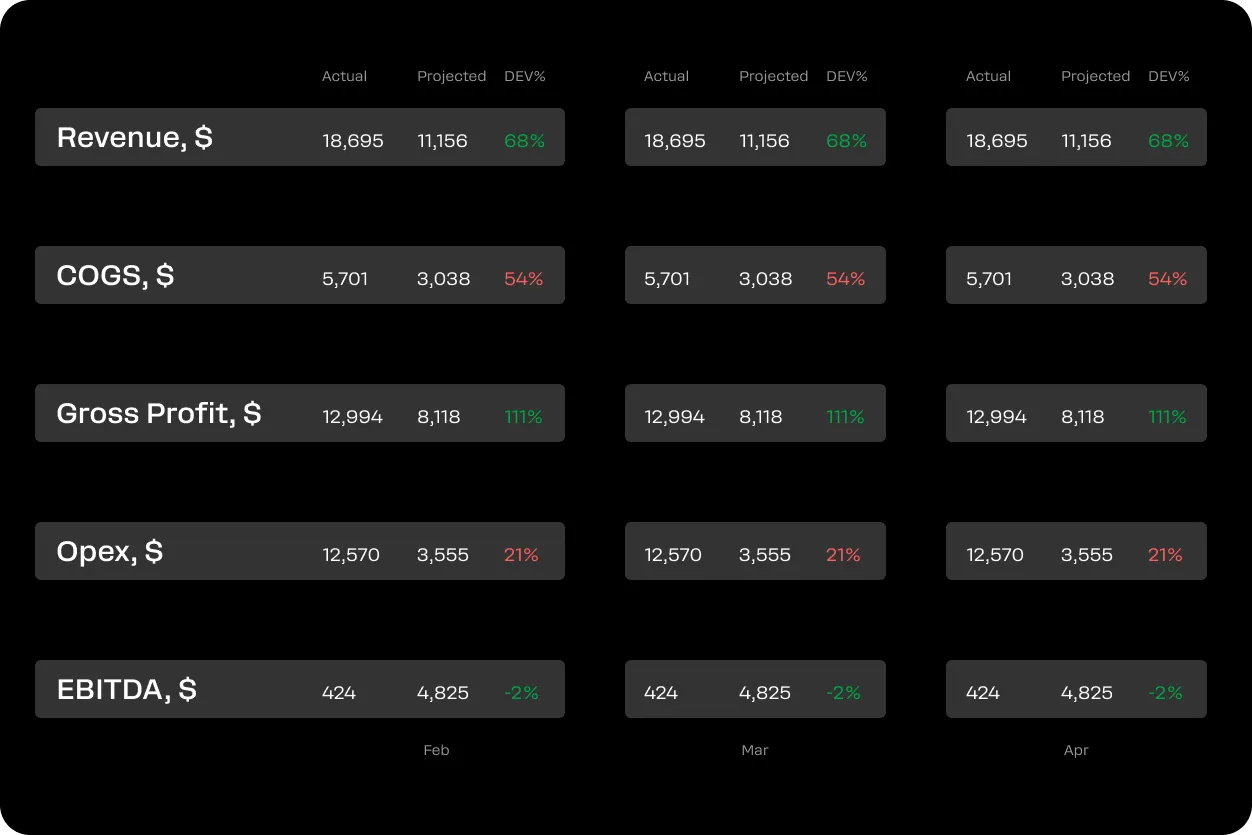
No, you don't need a finance MBA to think like a CFO. Phew. You just need the right approach and tools. Here are the core strategies that separate success stories from sleepless nights.
Your bank account balance is not your cash flow. This might be the most expensive mistake business owners make regarding both personal and business finances. Real cash flow forecasting means knowing when money comes in, when it goes out and what happens in between.
Smart business owners track three key cash flow metrics: operating cash flow (money from day-to-day operations), investing cash flow (money spent on growth) and financing cash flow (loans, investments, etc.). Modern financial dashboard software like Fuelfinance can automate this tracking, pulling data directly from your accounting systems via a Xero or QuickBooks integration.
"We want to grow" isn't a financial goal — it's a wish. Real goals look like this: "Increase monthly recurring revenue by 25% over the next six months" or "Build a six-month cash reserve by Q4." We've all heard of SMART goal-setting — use it.
We shouldn't need to say this, but it's also worth a mention — separate your personal financial goals from the business ones. Sure, your company will probably turn out to be a solid retirement plan, but only if it's run properly. Leave your personal financial planning elsewhere, and give this post on how to pay yourself as a founder a read.
Break your goals into two categories: operational goals (improving margins, reducing costs) and growth goals (new markets, products, hires). Then use financial planning software tools like Fuelfinance to model different scenarios and see what's realistic.
Not only do we give you AI-enhanced financial planning capabilities based on your real-time data, but you also get plan vs actual analysis to adjust those action plans based on the results you're getting.
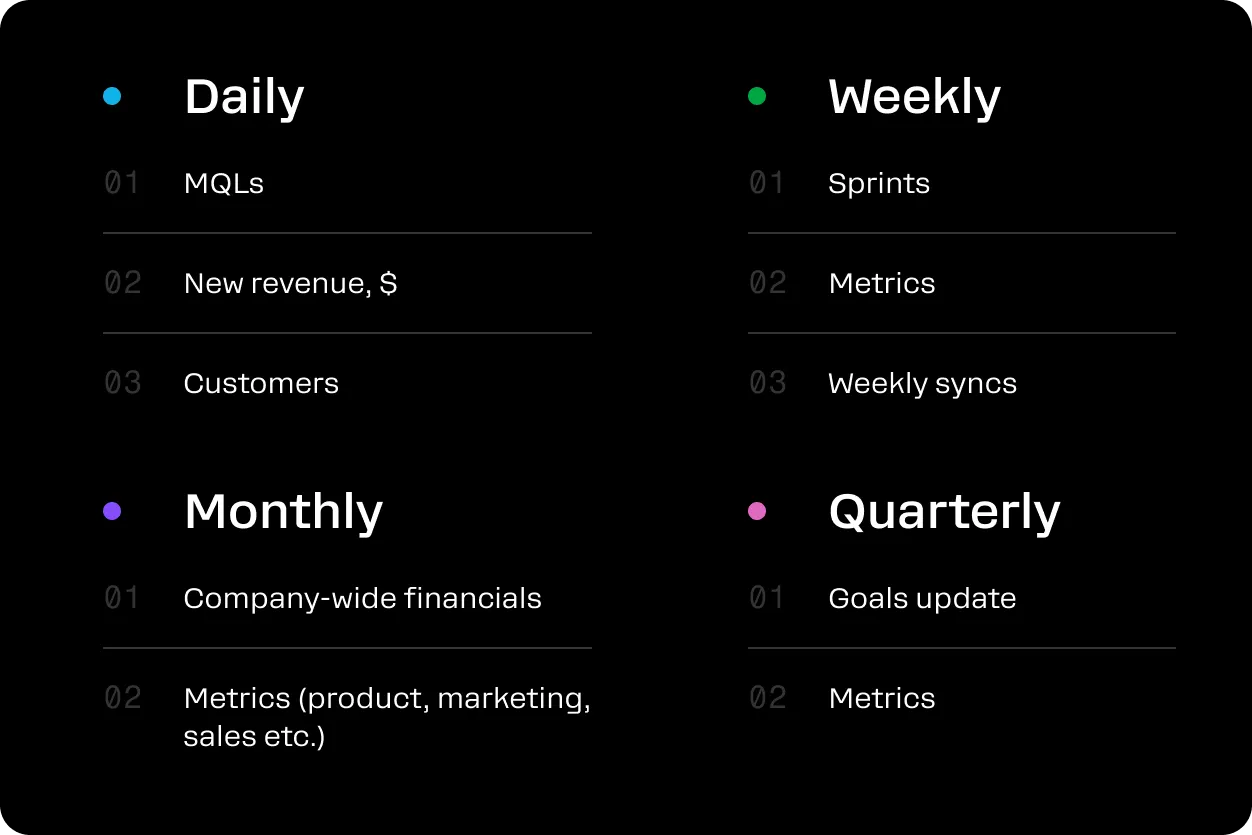
The most successful business owners check their numbers weekly, not monthly (and inform their leadership team about them). But they don't check everything — they focus on the financial metrics that actually matter for their business.
For most companies, this means tracking gross margin, customer acquisition cost, lifetime value, burn rate and runway. If you're in SaaS, add key SaaS metrics like churn rate and monthly recurring revenue. Agencies should track agency metrics like utilization rates and project profitability.
Nobody likes tax surprises, nor the need for emergency loans. Smart financial management includes tax planning with quarterly tax estimates, compliance deadlines and setting aside money for tax obligations.
Many business owners use business budgeting software to automatically calculate and set aside tax reserves. This prevents the scramble that happens when tax season arrives and helps you manage your tax burden.
You need to know how much growth you can afford, when you'll need additional funding, and what metrics to watch as you scale.
Fuelfinance's modern AI forecasting tools can help predict revenue, expenses and cash flow based on historical data and growth assumptions. This isn't crystal ball territory — it's using data to make informed decisions about the future, risk management included.
Whether you're bootstrapped or venture-backed, you need financial reports that tell a clear story. Investors and lenders want to see small business financial statements that are accurate, timely and professionally presented.
This means having clean books, clear financial projections, and the ability to explain your numbers confidently. Many founders only discover they need fundraising support when they're running low on cash. That doesn't give you nearly enough time to get your financials in order.
Here's where things get interesting. You don't need to choose between doing everything yourself and hiring a full-time CFO. Outsourced financial services give you financial professional-level expertise without CFO-level costs.
The best fractional CFO services combine human expertise with technology. At Fuelfinance, you get strategic financial guidance from a dedicated finance pro, automated reporting and forecasting and professional financial analysis — all for a fraction of what you'd pay for an in-house hire.
If you're spending more than 10 hours a week on financial tasks and spreadsheet updates, it's high time for professional help. Schedule a call, and we'll show you exactly where you can save time and money.
Working with over 600 SMBs, we saw some recurring patterns that can seriously damage your business if you follow the same path.
Your bank account is like a snapshot — it shows you one moment in time. But business planning needs to be based on cash flow statements, not cash position, if you want a secure financial future that supports actual growth possibilities. You might have $50,000 in the bank today, but if you have $60,000 in financial obligations next week, you're in trouble.
The fix: Track your cash flow weekly and project it forward at least 13 weeks. Use our automated financial reports to get real-time visibility into money coming in and going out.
At Fuelfinance, we’re firm believers that you should always have at least one backup plan. Our software gives you a baseline and a target scenario. One to get you by when times are tough and the other to push you forward when you have the resources for it.
Good revenue forecasting considers seasonality, customer payment terms, growth trends in different revenue streams and much, much more. It also includes scenario planning: what happens if that big client pays late? What if sales drop 20%?
Waiting until tax season to look at your books is like waiting until you're sick to think about your health.
Monthly financial reviews should be standard practice. This doesn't mean spending hours in spreadsheets — it means having systems that give you the information you need quickly and accurately. Fuelfinance pulls your $ information from accounting tools to give you clear financial statements at hand whenever you need them.
Monthly reviews should cover actual vs. budget performance, cash flow projections, key metrics trends and any red flags in your financial resources that need immediate attention. The goal isn't perfection — it's awareness and quick course correction.
You don't have to worry about spotting them yourself. Modern financial management platforms like Fuelfinance automate most of the heavy lifting, giving you CFO dashboards with all the info ready at a glance.
The million-dollar question (literally, in some cases): should you hire a full-time CFO or find another solution? Here's the honest breakdown:
The in-house CFO reality check: Yes, having someone dedicated to your finances full-time sounds appealing. But unless you're making at least $10M+ in revenue, you're probably not ready for the cost and complexity of a full-time CFO hire.
Most growing businesses need CFO-level thinking, not CFO-level overhead. They need strategic financial guidance, professional reporting and automated systems — but they don't need someone in the office 40 hours a week.
The outsourced advantage: Modern outsourced CFO services combine the best of both worlds. You get strategic expertise when you need it, automated reporting and forecasting, professional financial analysis and the flexibility to scale up or down based on your needs.
For most founders, the sweet spot is combining smart technology with expert guidance. At Fuelfinance, you get the systems and automation you need for day-to-day financial management, plus access to experienced professionals when you need strategic support.
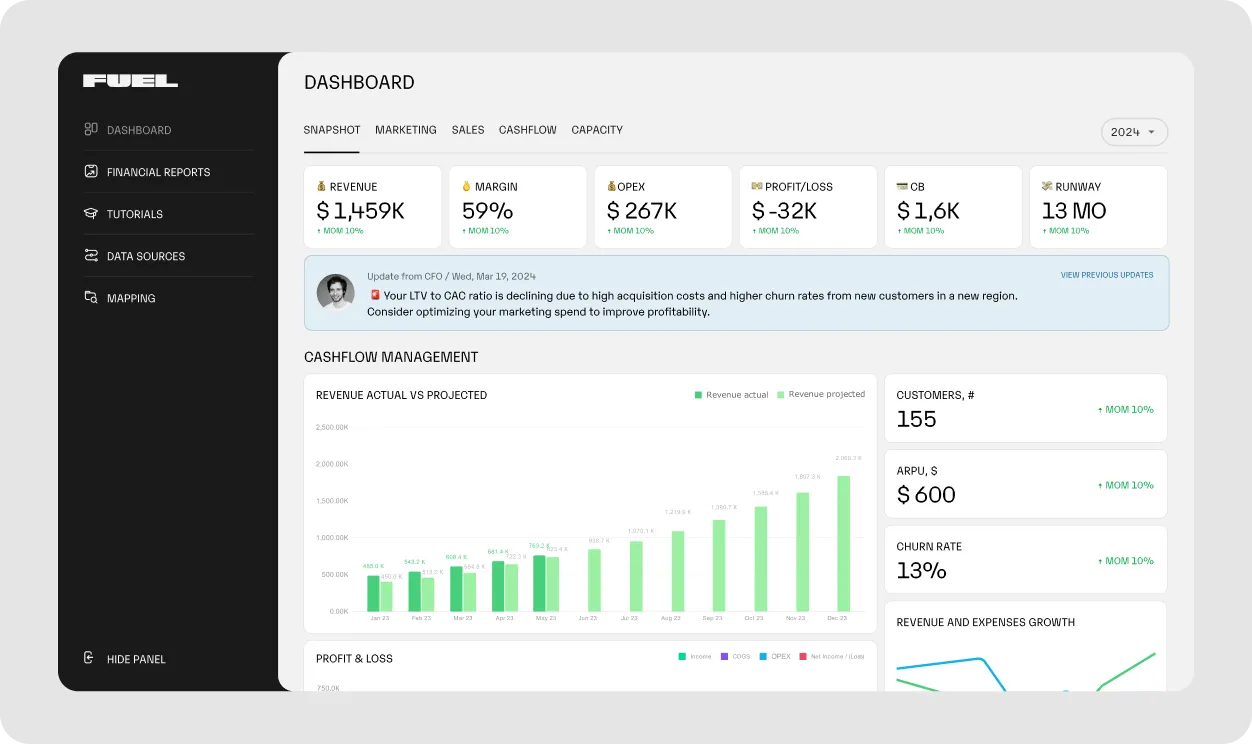
Hit us up to see exactly what your business needs to scale efficiently.
Enough theory — let's talk about what you can do this week to improve your financial planning. Here's a practical roadmap that actual business owners use.
Be honest: how much time are you spending on financial tasks that aren't moving your business forward? If it's more than a few hours per week, you might benefit from financial management solutions that combine automation with expert support.
66% of small businesses use accounting software or apps to manage their finances, but many still struggle with things like cash flow management, securing funding or late payments. We've seen it all — let us help.
Financial planning for business owners isn't optional if you want to build a sustainable, scalable company. You need clarity on cash flow, key metrics, proper forecasts and systems that give you CFO-level insights (that you can afford and understand).
The good news? You don't have to figure this out alone. With the right combination of tools, processes and expert guidance, you can gain complete control over your finances and focus on what you do best — building the solutions your customers need.
Fuelfinance combines CFO expertise with automation to give founders a clear financial roadmap for scaling. Instead of drowning in spreadsheets, you get professional financial analysis, automated reporting and strategic guidance that actually helps you grow.
Schedule your free demo today.
You don't need a finance degree, but you do need to understand the basics: cash flow, profit margins, key metrics for your industry and scary-sounding things like business interruption insurance. Focus on learning enough to make informed decisions and know when to ask for help. Many successful founders use AI financial analysis tools to handle complex calculations while they focus on strategy.
Start with the fundamentals: separate business and personal finances, track cash flow weekly, monitor key metrics monthly, and plan for taxes quarterly. Use business budget templates to structure your planning and financial reporting software to automate routine tasks.
Traditional financial advisors for businesses typically charge $150-$500+ per hour or $2,000-$10,000+ per month for ongoing services. However, modern fractional CFO alternatives like Fuelfinance offer comprehensive financial management starting at a fraction of those costs, with transparent monthly pricing instead of hourly billing.
Not necessarily. Most businesses under $10M revenue don't need a full-time CFO, but they do need CFO-level thinking and analysis. Small business financial management can be handled effectively with the right combination of technology and part-time expert guidance, giving you professional-level financial insights without the executive-level salary. Check out how Fuelfinance can help!


Just imagine how that would transform your team’s productivity and focus? Talk to our financial experts to know more.