See The New Fuel Live Recording


Small and medium enterprises face a common challenge: finances, inventory and customer data across 5+ disconnected tools. Enterprise resource planning (ERP) software may sound like corporate buzzword hell, but these ERP systems have pretty noticeable advantages, connecting and automating your accounting, inventory, customer relationships and business operations, saving you endless hours and dollars.
Connecting the dots helps you slash admin time, cut data errors and get proper visibility into all the nooks and crannies of your business.
This guide evaluates the top 12 ERP software solutions, including:
Discover pricing details, key features, and which ERP solution works best for your specific industry needs.
Enterprise resource planning (ERP) merges your accounting, inventory, CRM and operations into one dashboard. Less tab-switching, more "hot diggity dang, I can see everything".
Modern cloud-based ERP systems can go live in weeks, not quarters.
What you get:
Your ERP system should play nice with what you already use — not force a rip-and-replace bloodbath. Connect, don't convert.
One dashboard = your entire supply chain visible. Inventory levels, order status, warehouse capacity, all updating in real time. No more "let me check and get back to you."
Most cloud ERP solutions now bundle business intelligence tools, financial forecasting tools, project management and basic human resources. That's 4-6 separate subscriptions you don't need to buy.
The endgame? You compete like a $50M company while running lean. Better data = faster decisions = win deals bigger guys fumble.
We treated this like choosing ERP software for our own company.
Our filter:
We also flagged industry fit — what crushes it for manufacturing might bomb for agencies.
Support quality, go-live speed and mobile access sealed the deal. Because if it takes nine months to launch or customer service ghosts you, the "perfect" ERP system is worthless.
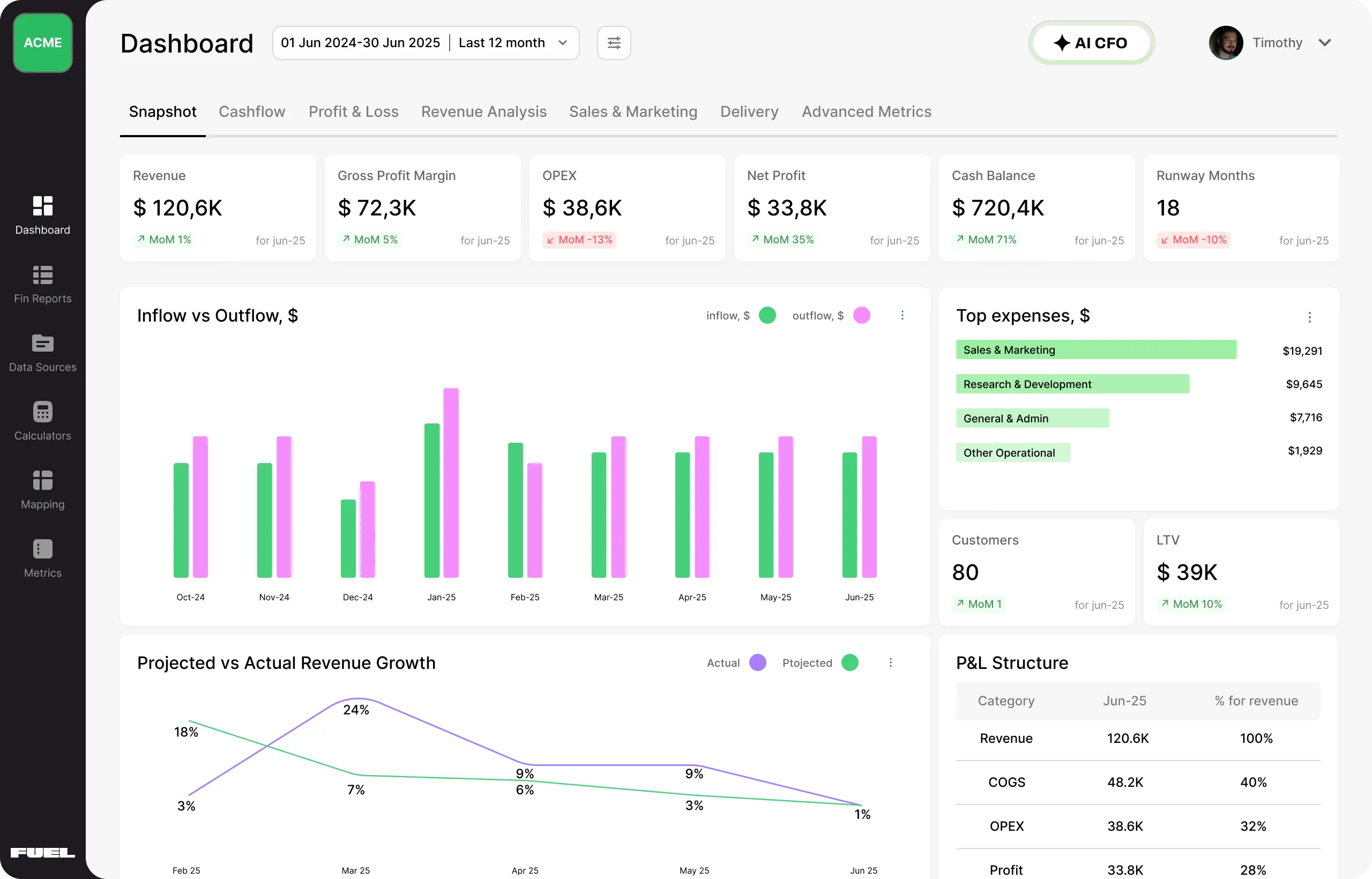
Stop tab-hopping between your CRM, accounting software, payroll, and HR systems like you're playing business whack-a-mole.
Fuelfinance isn't a traditional ERP — it's smarter than that. Instead of ripping out everything you already use, we connect it all into one unified command center. Your existing tools keep doing what they do best, but now they actually talk to each other.
You get real-time visibility across your entire business without the 6-month implementation circus or six-figure price tag. Finance sees consolidated financial reporting. Operations tracks inventory and sales. Leadership gets the full picture — all from one dashboard that updates live.
Key features:
Book a demo and see what business control feels like.
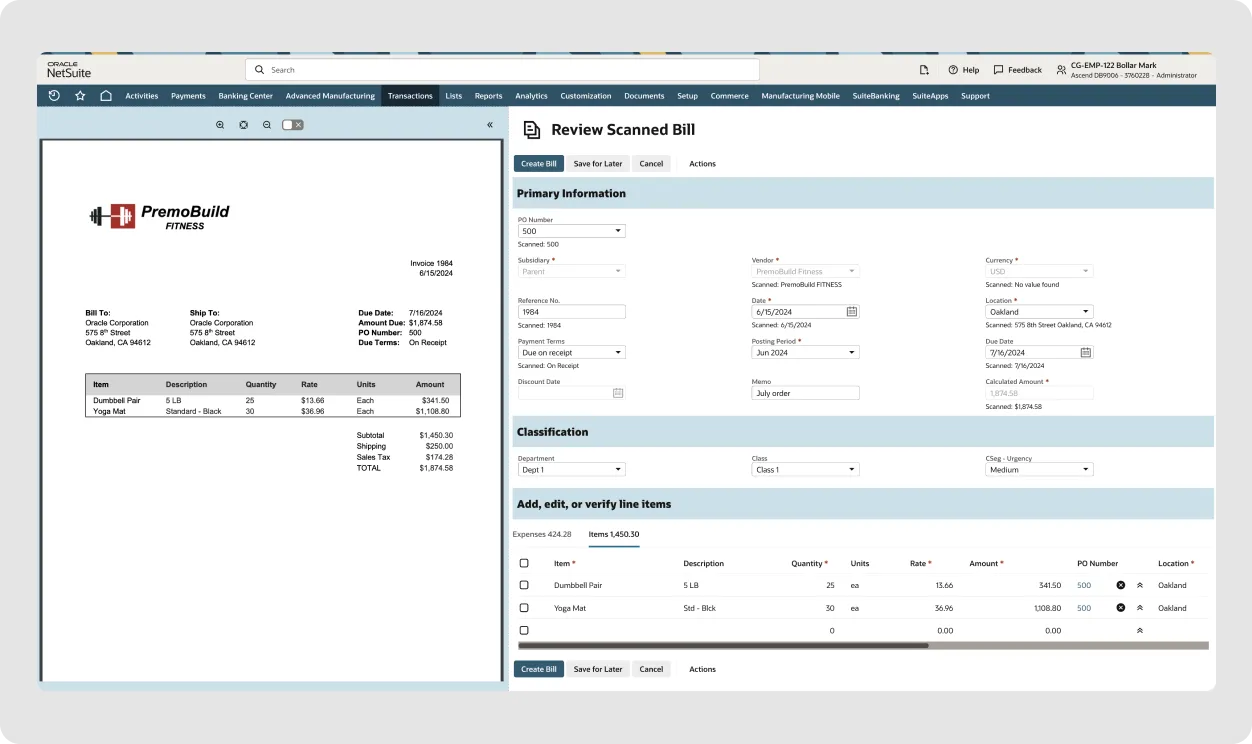
The heavyweight champion of SME ERPs — if you have the budget. NetSuite handles financials, inventory, customer relationship management and operations in one platform that scales from $5M to $500M+ revenue without breaking.
Real-time visibility across everything. No franken-stack of integrations. Your team gets one system that grows with you instead of becoming the bottleneck at year three.
The catch? Starting around $30K+/year in subscription fees, plus implementation costs. If you're ready for that commitment, it's comprehensive as hell.
See also: NetSuite review
Key features:
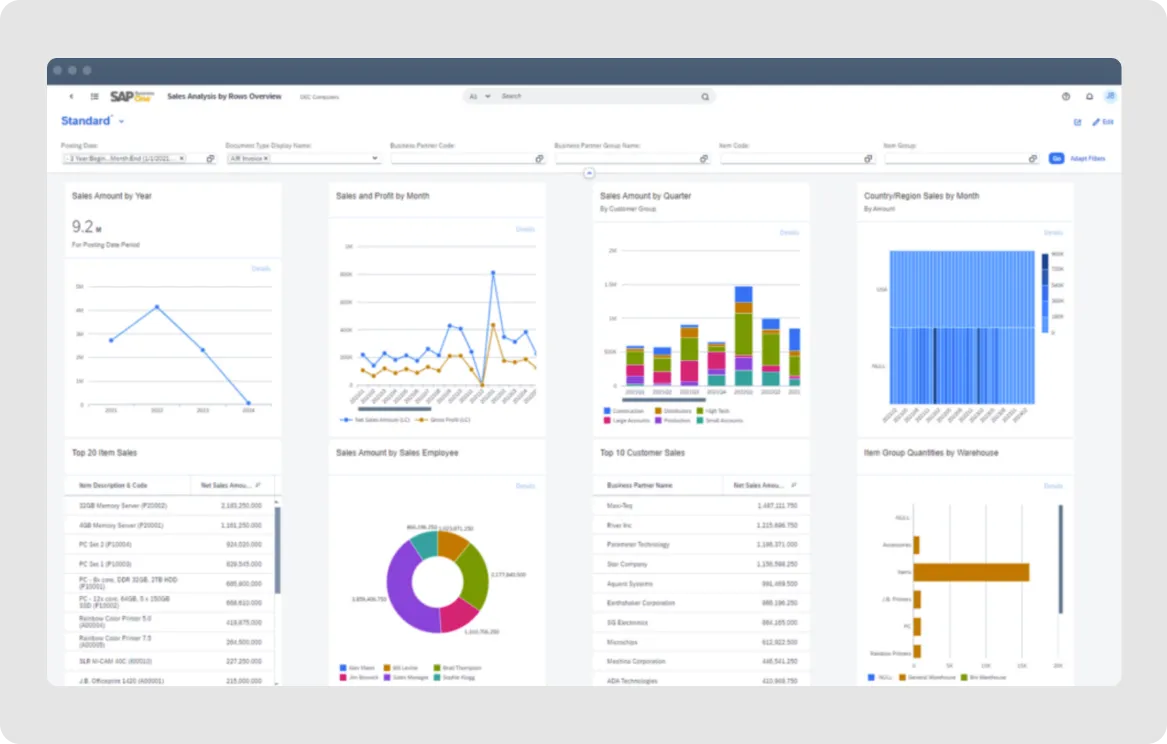
SAP Business One is SAP's "small business" version — which is relative, because this still feels enterprise-grade. Built for small and midsize businesses that need serious analytics and automation but can't stomach full SAP pricing.
Integrates financials with business operations and customer data. Strong audit trails and compliance reporting make accountants happy. Manufacturing companies especially love it.
Expect a learning curve and implementation timelines measured in months, not weeks.
Key features:
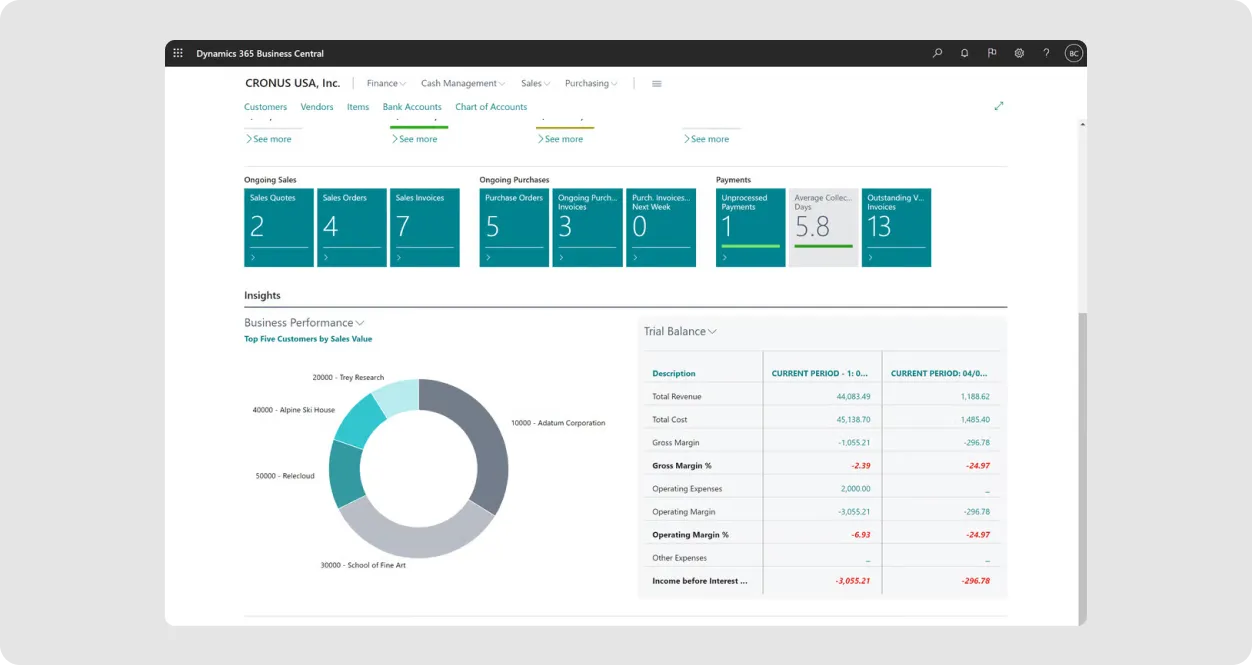
If your team lives in Microsoft 365, Microsoft Dynamics is the no-brainer ERP choice. Familiar interfaces, seamless integration with Outlook/Excel/Teams, and cloud-based flexibility.
It adapts to different industries while keeping the UX consistent. Your staff won't need weeks of training because it feels like Microsoft — because it is Microsoft.
Key features:
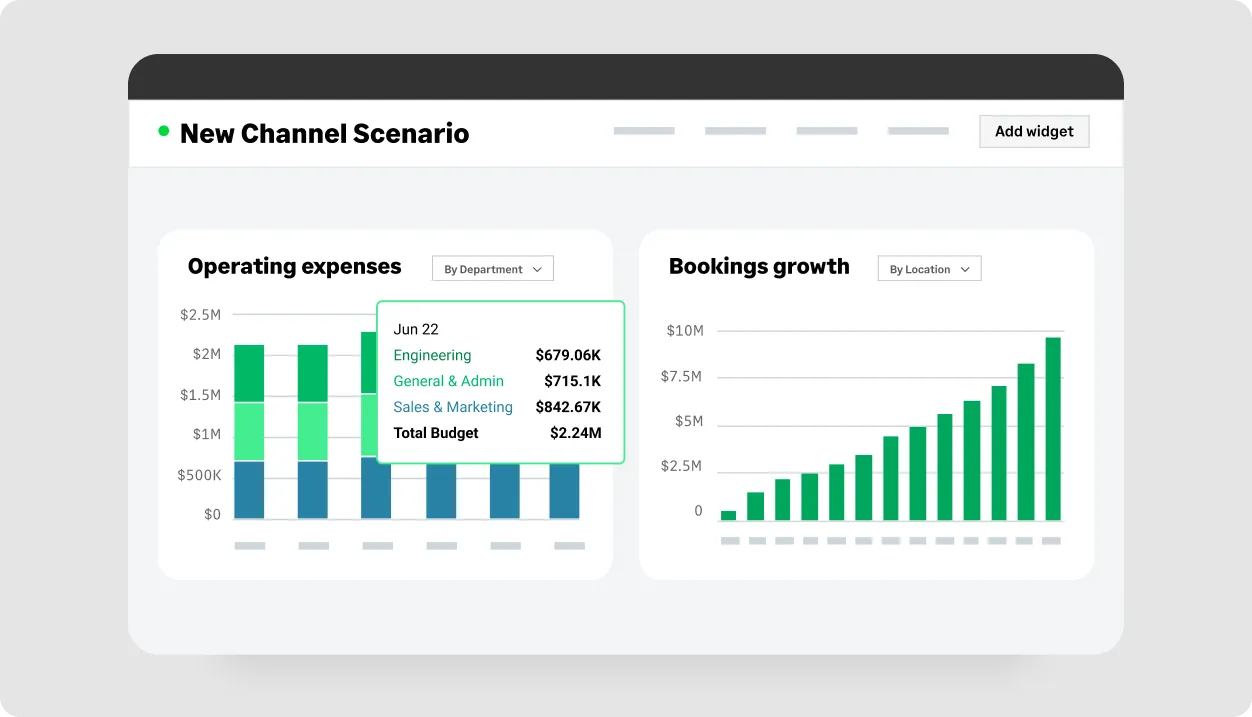
Sage Intacct is a cloud-based ERP for financial management, perfect for companies outgrowing QuickBooks but not ready for NetSuite's price tag. Intacct shines with dimensional reporting — slice your data by location, department, product line, whatever matters to your specific business.
The interface is clean, even for non-accountants. Initial setup takes time, but once you're live, it handles scaling quite well.
Key features:
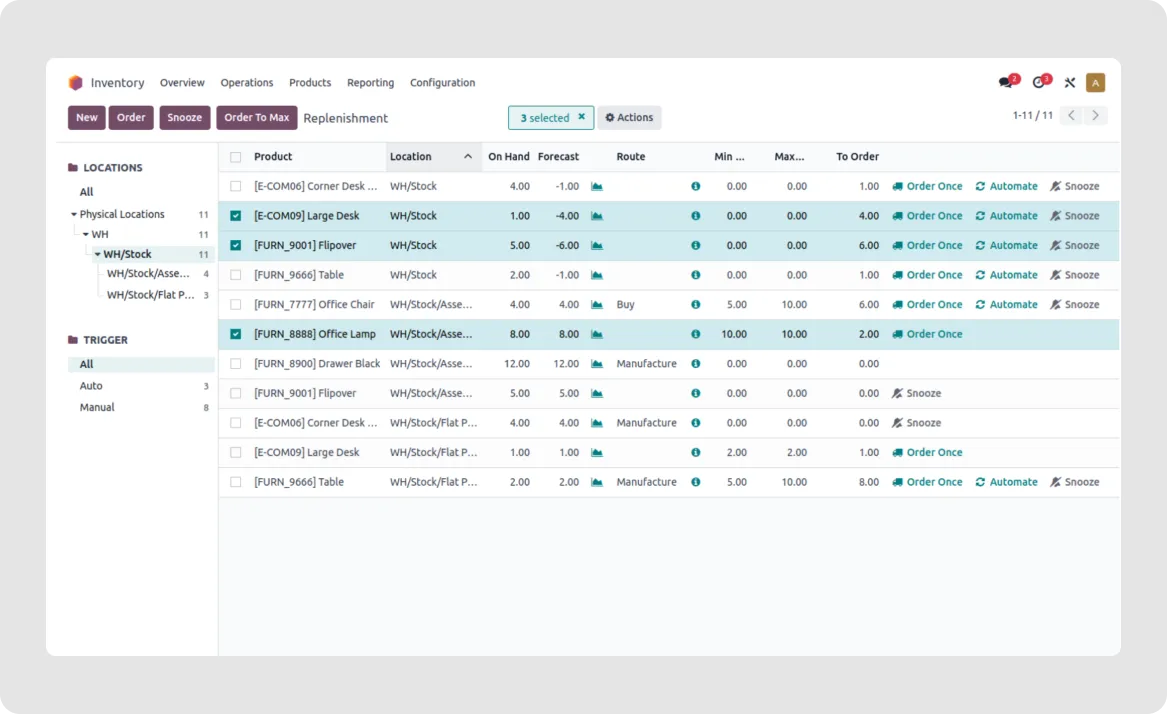
The LEGO set of ERPs: start with what you need, add modules as your business expands. Odoo ERP's open-source core means you can customize everything (or hire someone who can).
It has a steep learning curve upfront, but the modular approach prevents paying for features you'll never use. Customer support quality depends heavily on which service tier you pick.
Key features:

This one's for manufacturing and distribution specialists only. If you're not moving physical products through complex business processes, look elsewhere.
Built for real-time production visibility, it lets you track shop floor status, inventory and resource utilization live. It runs on modern cloud infrastructure with solid mobile access.
Epicor Kinetic is pre-configured for industries like automotive, aerospace and medical devices. Knows manufacturing better than generalist ERPs.
Key features:
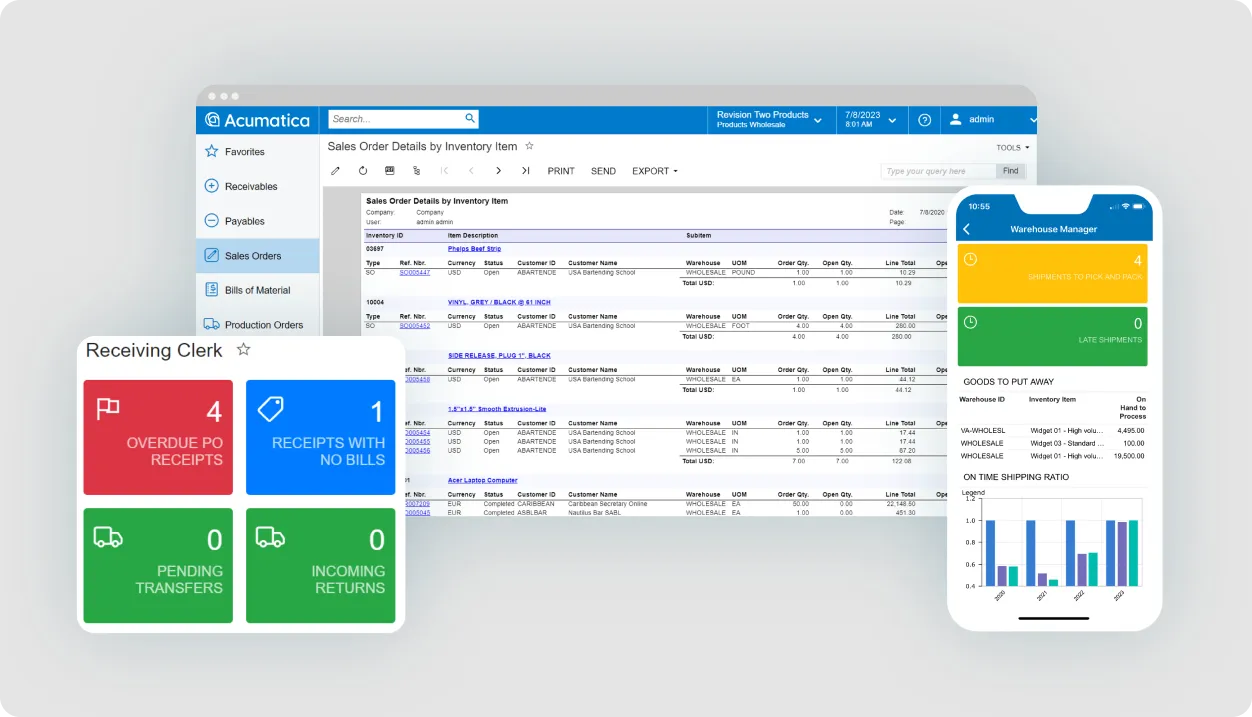
The cloud-based ERP system for mid-market companies wanting strong integrations without overwhelming pricing. It's fully mobile through responsive design—no separate app needed.
Users consistently praise the user-friendly interface and helpful support. Some advanced features need customization, but the core functionality is solid out of the box.
Key features:

QuickBooks grew up and got serious — same familiar interface, with enterprise capabilities. It handles up to 40 users and processes massive data files without choking.
If your team already knows QuickBooks, this is the path of least resistance when scaling. You get sophisticated tools without abandoning existing processes everyone already understands.
See also: Best QuickBooks Alternative for Small Businesses
Key features:
See also: Best QuickBooks Integrations for Better Financial Management

Workday handles human resources and finance for big teams. If you have fewer than 100 employees, this is overkill. Above that threshold? Workday excels at human capital management tied to financial planning.
Think of it like this: real-time workforce analytics meet financial insights. You can create custom dashboards that connect headcount to budget to business performance.
Consider long implementation timelines (think months) due to the platform's depth, though. Service companies with complex workforce needs get the most value out of this one.
Key features:

Enterprise-grade, enterprise-priced; Oracle's AI-powered platform for medium sized businesses and large enterprises modernizing financial operations. It's built for global operations with touchless automation.
It gives you deep ERP capabilities and serious efficiency gains across international ops. But expect high setup complexity, steep ongoing costs and a learning curve that requires dedicated IT resources.
Only consider this if you're doing $50M+ revenue with complex global operations.
Key features:
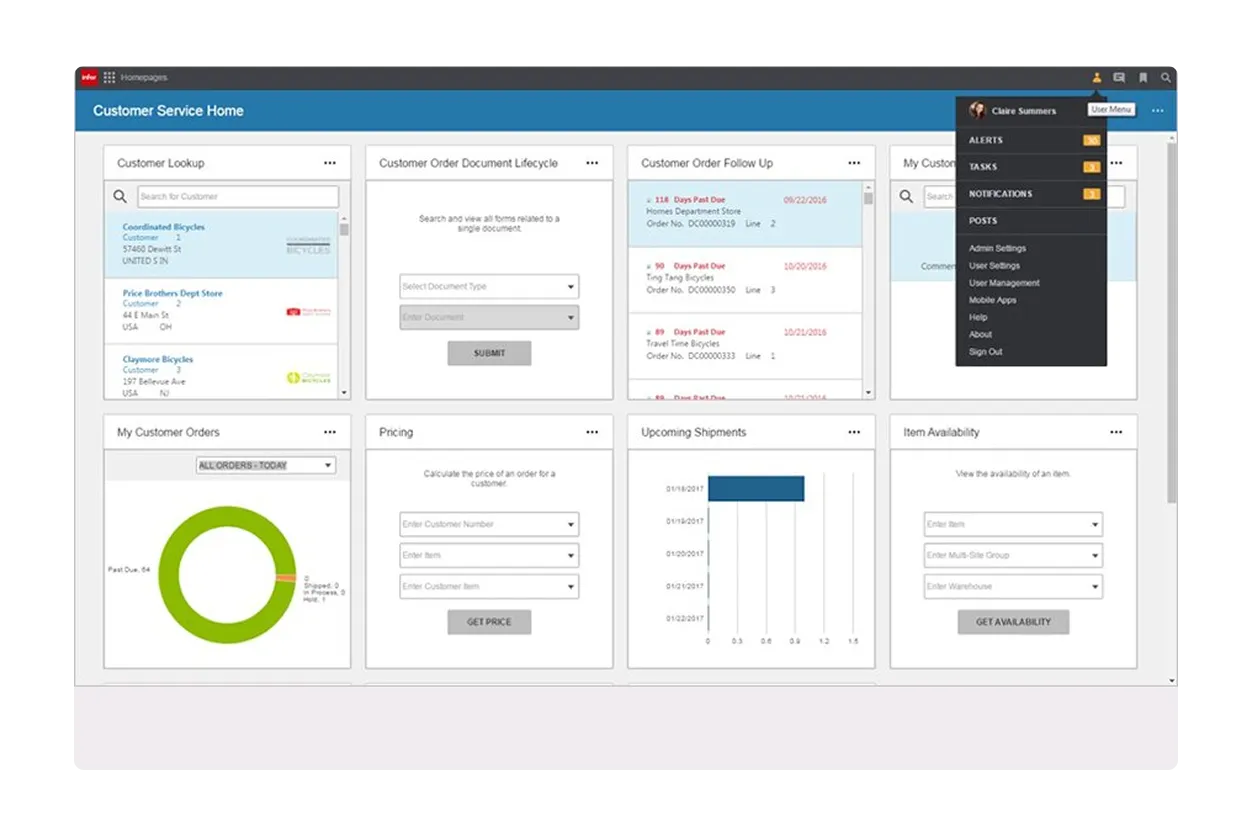
Infor CloudSuite is an industry-specific ERP for manufacturing, healthcare, distribution and the public sector. It speaks your industry's language with pre-built workflows and compliance tools.
This tool has strong financial management and supply chain management optimization. Users like the flexibility and analytics, but integration challenges and pricing complaints are common.
Key features:
Sure, NetSuite and SAP still crush it for enterprises. But if you're running a sub-$20M business, the "rip everything out and rebuild" approach is insane. You already have tools that work — your CRM isn't broken, your payroll provider is fine, your accounting software does the job.
The actual problem? They don't talk to each other. So you're stuck playing data detective across seven platforms.
That's where Fuelfinance flips the script.
Instead of replacing your entire tech stack and dealing with complex data migration, we connect it. One single platform. Real-time data from your CRM, payroll, HR and accounting. No eight-month implementation hell. No consultant invoices that make you weep.
Think of it like this: Traditional ERP is buying a whole new house because your kitchen and living room don't connect. Fuelfinance is knocking down the wall.
The result? You get enterprise-level visibility without enterprise-level pain. Or price tags. Plus, you'll see significant cost savings and reduce operational costs without sacrificing functionality.
Hit us up if you want to join the club of founders who chose sexy, unified data over bloated ERP drama.
NetSuite if you're scaling fast and have $30K+/year to spend. QuickBooks Enterprise if you're graduating from basic bookkeeping. Odoo and Zoho ERP if business needs and budget matter more than bells and whistles.
Most SMEs don't need a full ERP yet, though. Fuelfinance connects your existing tools (accounting, CRM, payroll) into one dashboard — way faster to deploy, fraction of the cost and you keep what already works.
SAP Business One crushes complex warehousing (multi-location, serial tracking, batch management). Odoo handles automated reordering and barcode scanning well. NetSuite gives real-time visibility across locations with solid demand planning.
These systems tie inventory directly to financials, so you know your stock valuation and margins without spreadsheets.
Cloud-based ERP solutions like QuickBooks Advanced: about 4 weeks. You're live before your next board meeting.
On-premise beasts like SAP: 3-6 months. Multiple consultants. Lots of tears.
Fuelfinance goes live in two weeks because we're connecting, not replacing. No data migration nightmares, no workflow overhauls, just plug in your existing tools and go.
Speed = earlier ROI. Pretty simple math.
Good news: No servers, no IT team, no "the backup failed" panic attacks.
Your ERP vendor handles updates, security patches and compliance. You need decent internet and basic training. That's it.
Security? Bank-grade encryption is standard. Most cloud-based ERP systems are more secure than your legacy systems because they have dedicated security teams.
Bonus: Cloud systems play nice with tools like Fuelfinance, so your entire financial stack stays connected and protected — without needing a CTO on speed dial for streamlined operations.


Just imagine how that would transform your team’s productivity and focus? Talk to our financial experts to know more.




.webp)