See The New Fuel Live Recording


Here's the thing about Workday Adaptive Planning: it's powerful — but it comes bundled with broader human resources, human capital management and performance management capabilities that growing businesses neither need nor have time to master. Months of implementation, custom pricing that requires three sales calls to establish, and a learning curve steeper than a hockey stick. If you're a Fortune 500 company with a dedicated IT and HR team running core HR processes, payroll services and benefits administration, great.
But if you're a founder trying to make sense of finances while actually growing your business? There's gotta be a better way.
And there is.
In this guide, we're breaking down the top Workday competitors that are built for speed and usability, without all the enterprise-level operations, unified HR management, global workforce complexity or hidden fees that often come with Workday’s expanded ecosystem.
Before we jump into Workday alternatives, let's talk about what you're actually trying to replace.
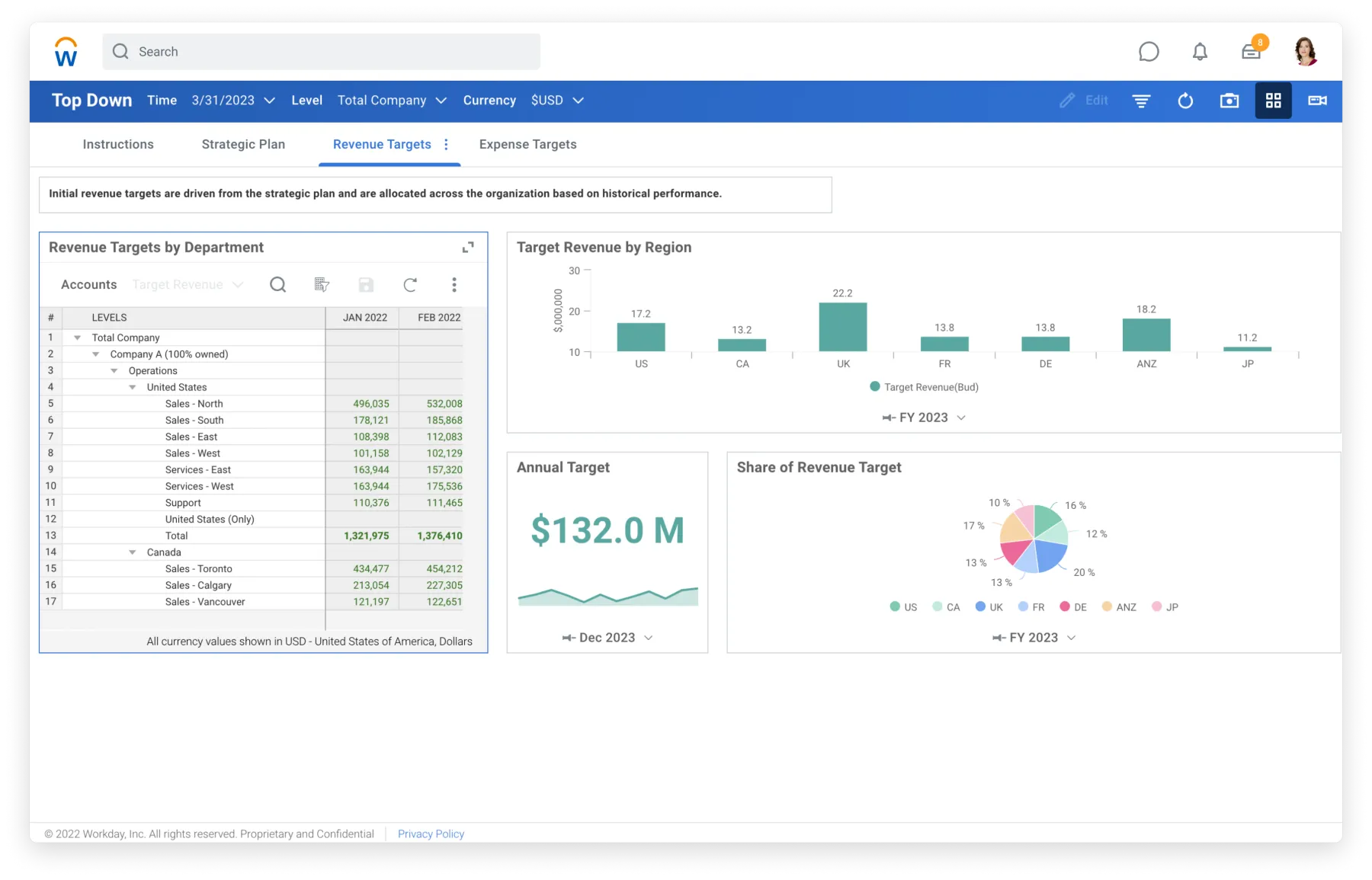
Workday Adaptive Planning is the heavyweight champion of enterprise FP&A. It connects with your ERP, handles multi-entity consolidation and offers strong scenario modeling. Multiple large global companies use it, including some serious players with complex financial operations, payroll management, employee records and global teams to support.
Here's what makes teams look for Workday competitors:
The bottom line? Workday Adaptive Planning is built for organizations with complex, multinational operations, often requiring professional employer organization support or employer of record infrastructure. If you're a smaller agency or growing business, trying to get financial forecasting up and running this quarter, you need something leaner.
Here’s your comparison table with the Workday alternatives founders actually use—many of which also integrate seamlessly with HR tools, employee onboarding, new hire reporting, time tracking and attendance tracking solutions when needed.

Now let's dig into each tool.
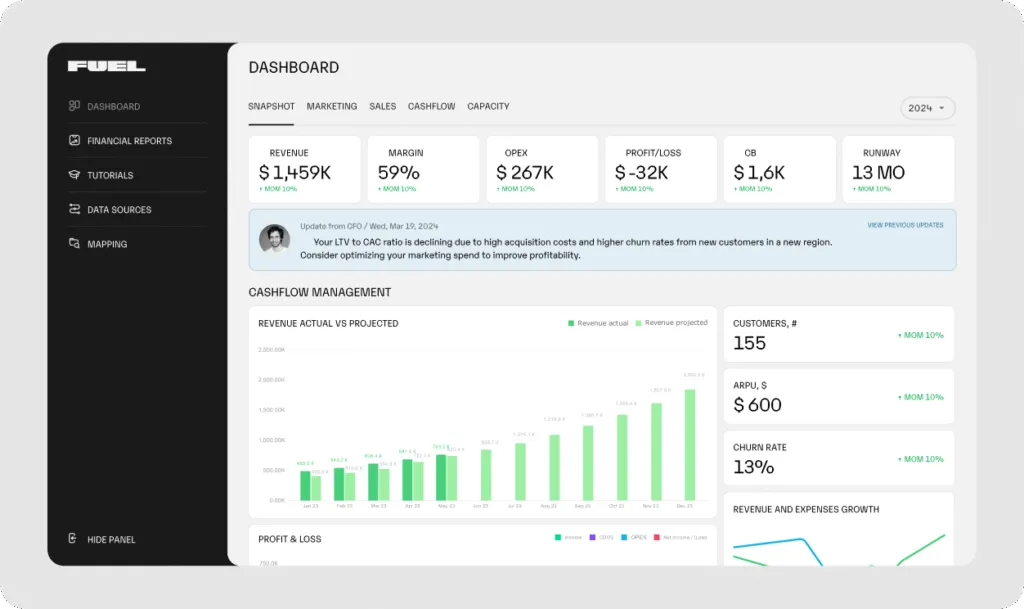
Fuelfinance is what happens when you build FP&A software specifically for founders who want to spend time growing their business, not fighting with spreadsheets.
It's a complete financial engine that integrates cleanly into your existing tech stack, reducing administrative tasks and giving founders clarity without enterprise overhead. Although not an HR platform, it’s tailor-fit for service companies and how they work. It connects smoothly with systems that handle employee data, pay contractors, direct deposit, tax filing and benefits administration, making it a strong partner for fast-scaling teams. Fuelfinance also includes features for capacity and hiring plans, as well as sales forecasts and profitability insights per service or job.
It works as a standalone cloud program, but it can also connect with your Google Sheets without the need for complex data migrations.
This isn't just software — it's a complete financial planning and analysis platform for service companies and SaaS. While Workday competitors focus on features, Fuelfinance focuses on outcomes. You get AI-powered forecasting that actually works, dashboards that tell your story and can be generated with one natural-language sentence prompt, and a dedicated (human) financial expert who knows your business and is always available for help.
Founders without a tech or finance degree, CFOs, agencies, professional services and anyone else who needs to show investors they have their s**t together, without hiring a full-time CFO or spending months on implementation.
One of our partners cut their finance and accounting costs by 50% and got 2-3x more value while getting better insights than enterprise tools provide. Automated and accurate reporting, unit economics, all-in-one founder’s dashboard, plan vs. actual analysis, detailed marketing analytics, proactive customer support and so much more — it’s all there.
Source: Capterra
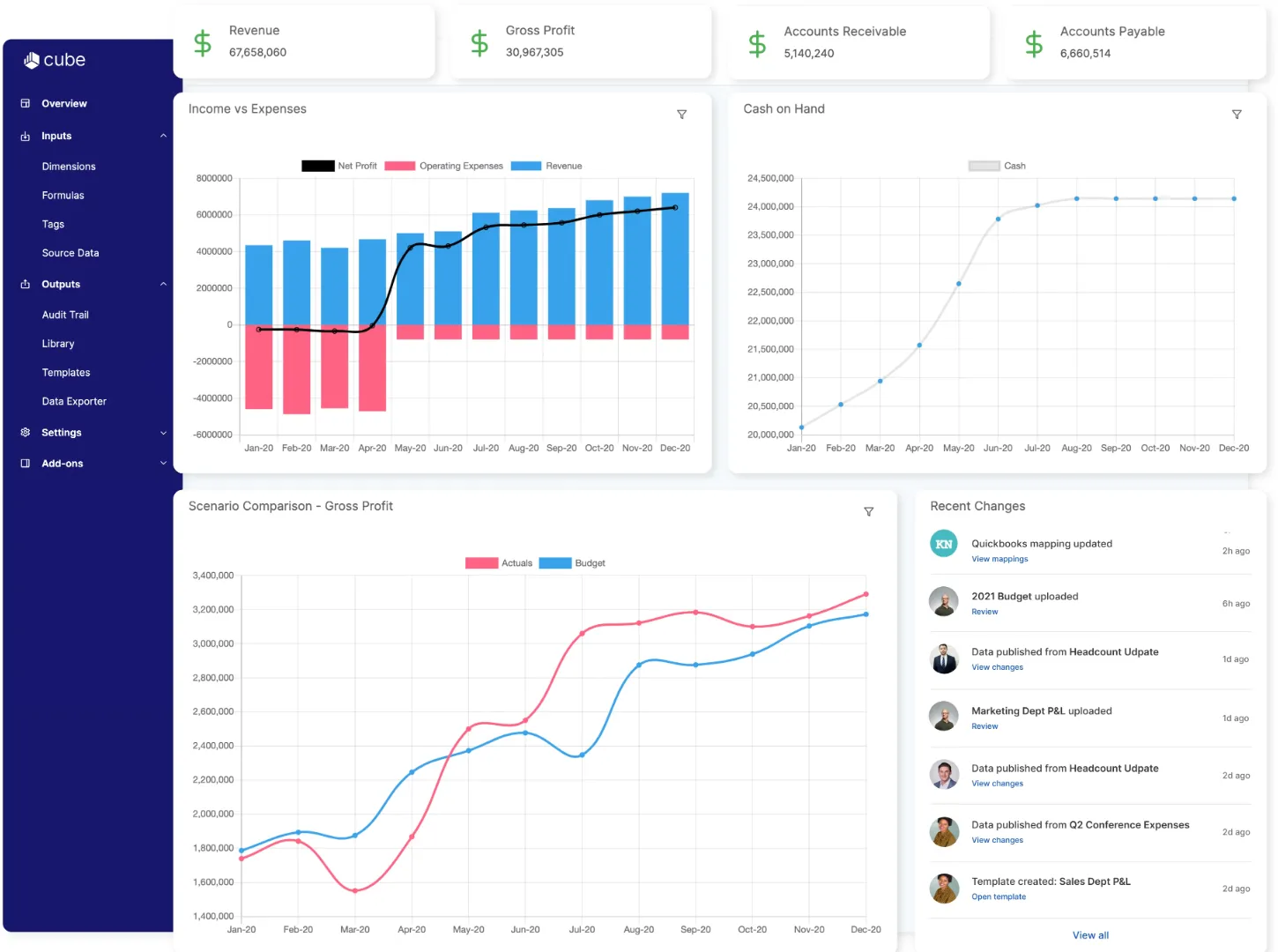
Cube is the Workday competitor for teams that refuse to give up their spreadsheets.
It transforms Excel and Google Sheets into an FP&A platform without forcing you to learn new software. It's spreadsheet-native, which means your finance team can start using it today if your data already lives there.
Cube is especially compelling for companies that want FP&A automation without disrupting adjacent systems. By enhancing Excel-based processes, Cube allows finance and HR partners to manage employees effectively using shared data across systems.
See also: Datarails vs Cube comparison
Best for: Small to mid-size companies that live in spreadsheets and want to automate the tedious parts without changing their entire workflow.
Source: Capterra
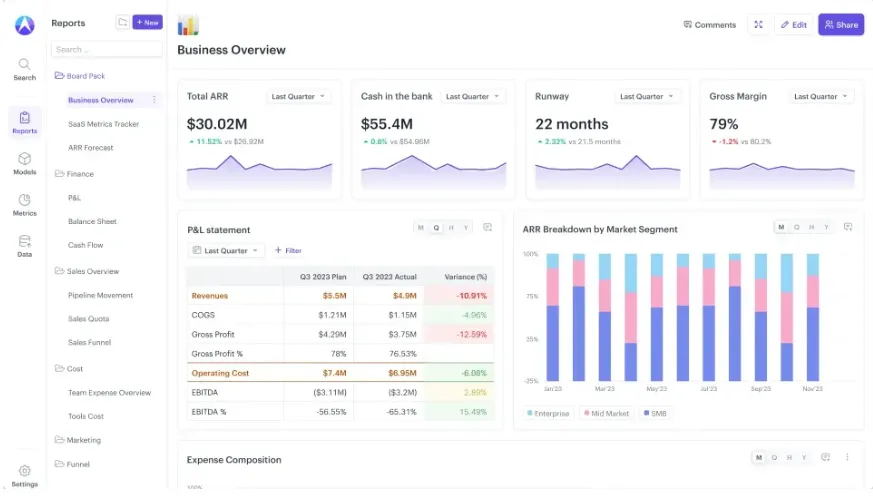
Drivetrain is the AI-native strategic finance platform that's making Excel-level flexibility possible without Excel-level chaos.
Drivetrain’s flexibility often complements internal HR processes, especially for mid-size SaaS companies with a growing international workforce and cross-functional planning needs across finance, HR and operations. Its advanced reporting capabilities help unify data traditionally siloed across HR, payroll and finance.
Best for: Mid-market SaaS companies that need enterprise power without enterprise complexity.
Source: Capterra
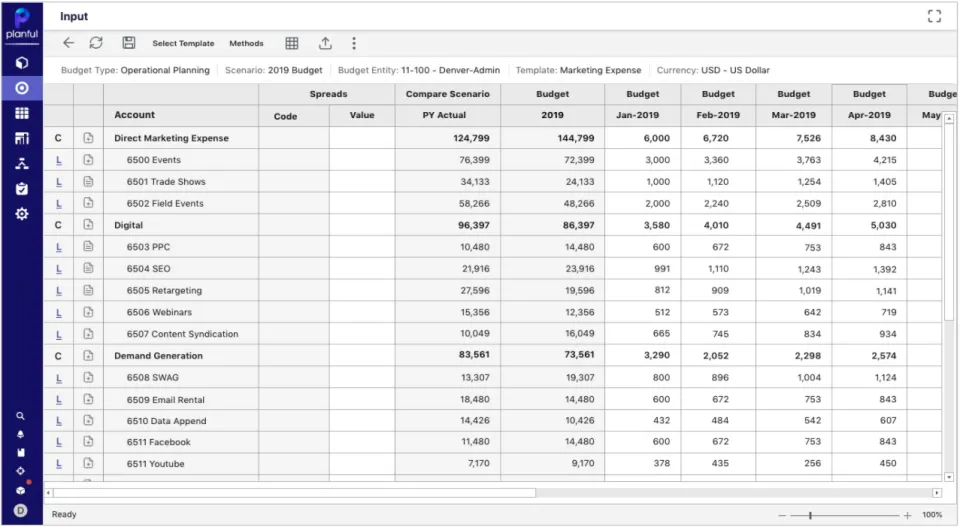
Planful sits somewhere in the middle ground between Workday and lighter tools.
It offers end-to-end FP&A with consolidation features and AI-powered insights. Implementation is faster than Workday, and pricing is more competitive.
Planful includes modules for workforce planning, making it relevant for companies trying to bridge HR and FP&A without adopting a full-blown HCM suite. While it doesn't replace dedicated HR services or HR solution platforms, it does help quantify hiring plans, headcount costs and employee performance impacts.
See also: Planful alternatives
Best for: Mid-market companies outgrowing spreadsheets but not ready for Workday's complexity or price tag.
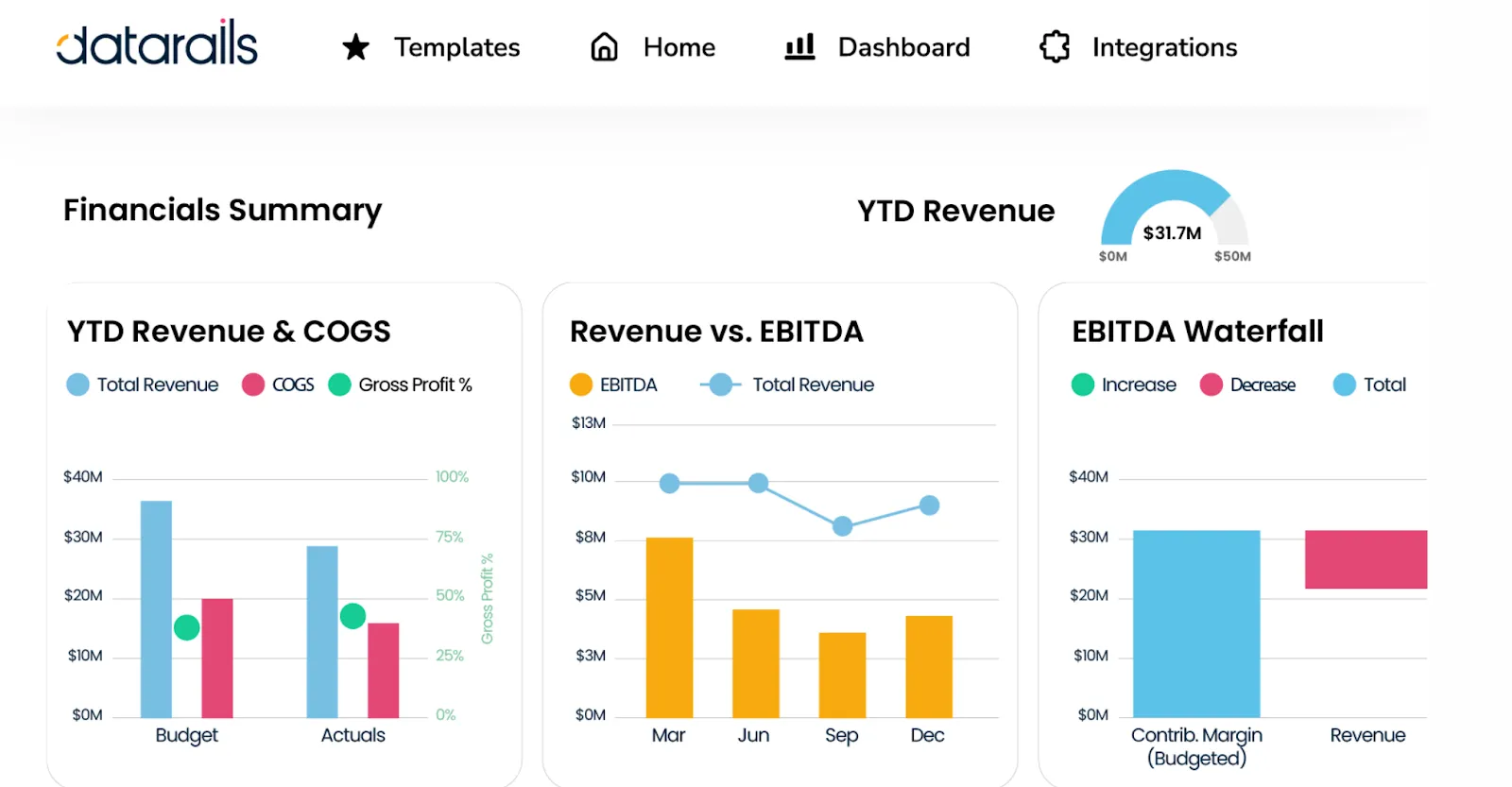
If your finance team lives in spreadsheets and you're tired of version control nightmares, Datarails keeps you in Excel while adding automation, consolidation and AI insights.
Datarails enhances transparency and accuracy across finance and HR-related spreadsheets, including those used for benefits management, retirement plans, compensation and headcount modeling. Its automation eliminates months of repetitive administrative responsibilities.
See also: Datarails competitors
Best for: SMBs that are Excel-centric and want to automate without abandoning their current workflow.
Source: Mosaic
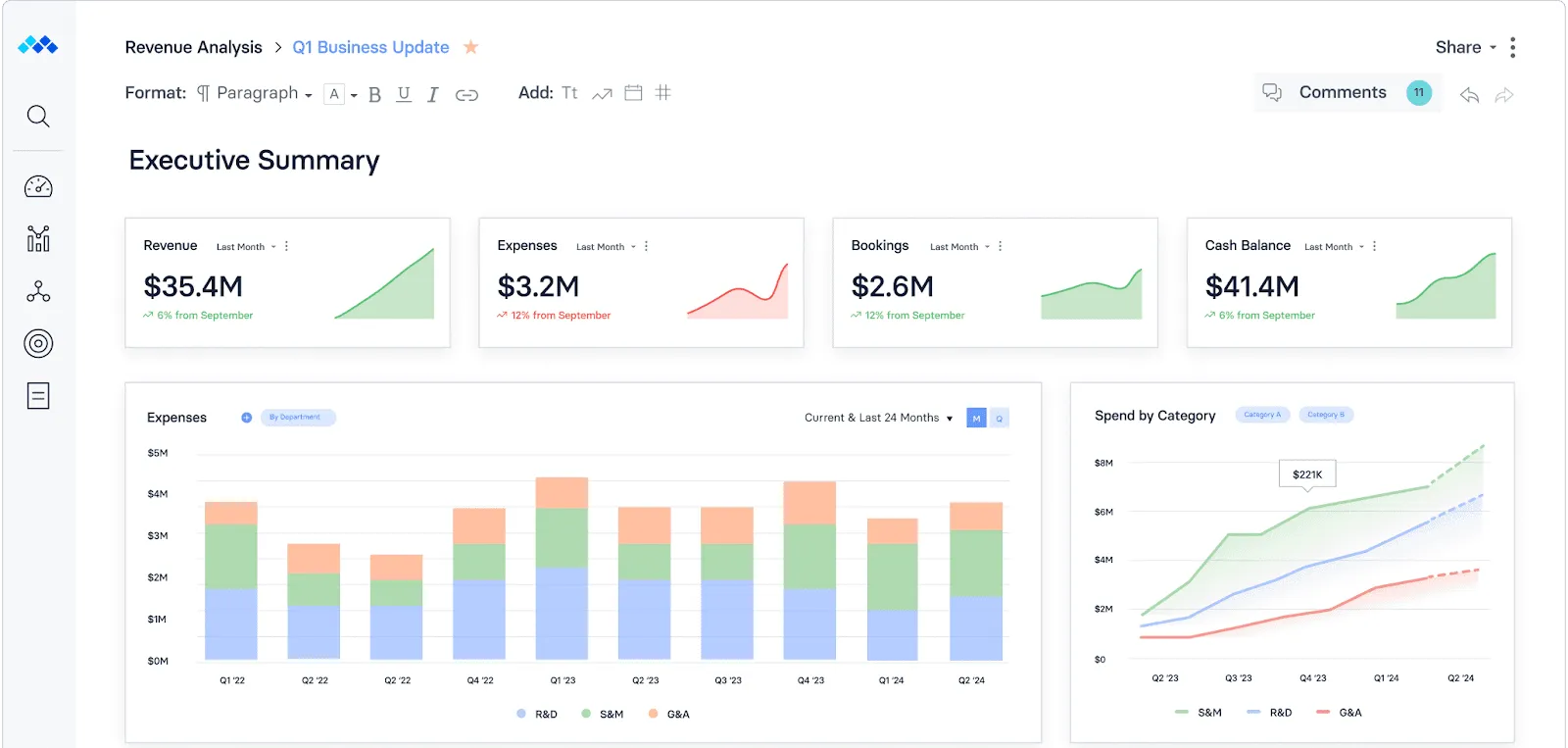
Mosaic is a strategic finance platform for mid-market companies, offering data consolidation across ERP, CRM and HR systems.
It's shifting toward deeper HR-finance alignment, with more emphasis on employee management, core hr and talent management data flowing into FP&A dashboards. This moves it closer to companies needing combined financial and HR insights.
Best for: Companies needing FP&A combined with integrated HR-finance solutions.
Source: Fathom
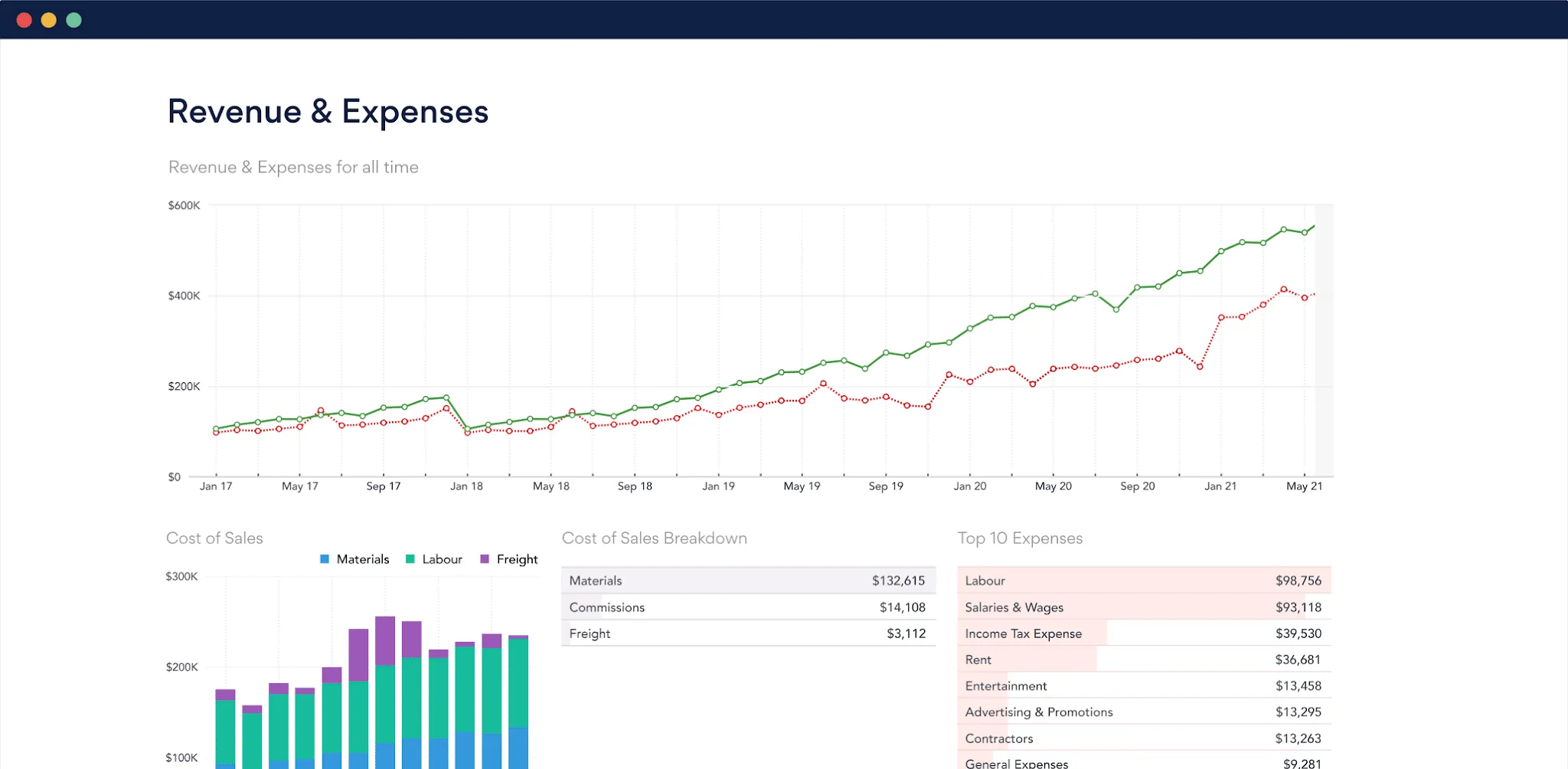
Fathom is the Workday competitor for accounting firms, franchises and businesses that need comprehensive financial reports without the complexity.
It integrates well with small businesses that need clear visibility into margins, performance and consolidated reporting. Accounting firms using Fathom often provide payroll services and hire reporting for clients, making it a natural complement.
Best for: Accounting advisors managing multiple clients, franchise operators and small business managers who need professional reports fast.
Source: G2
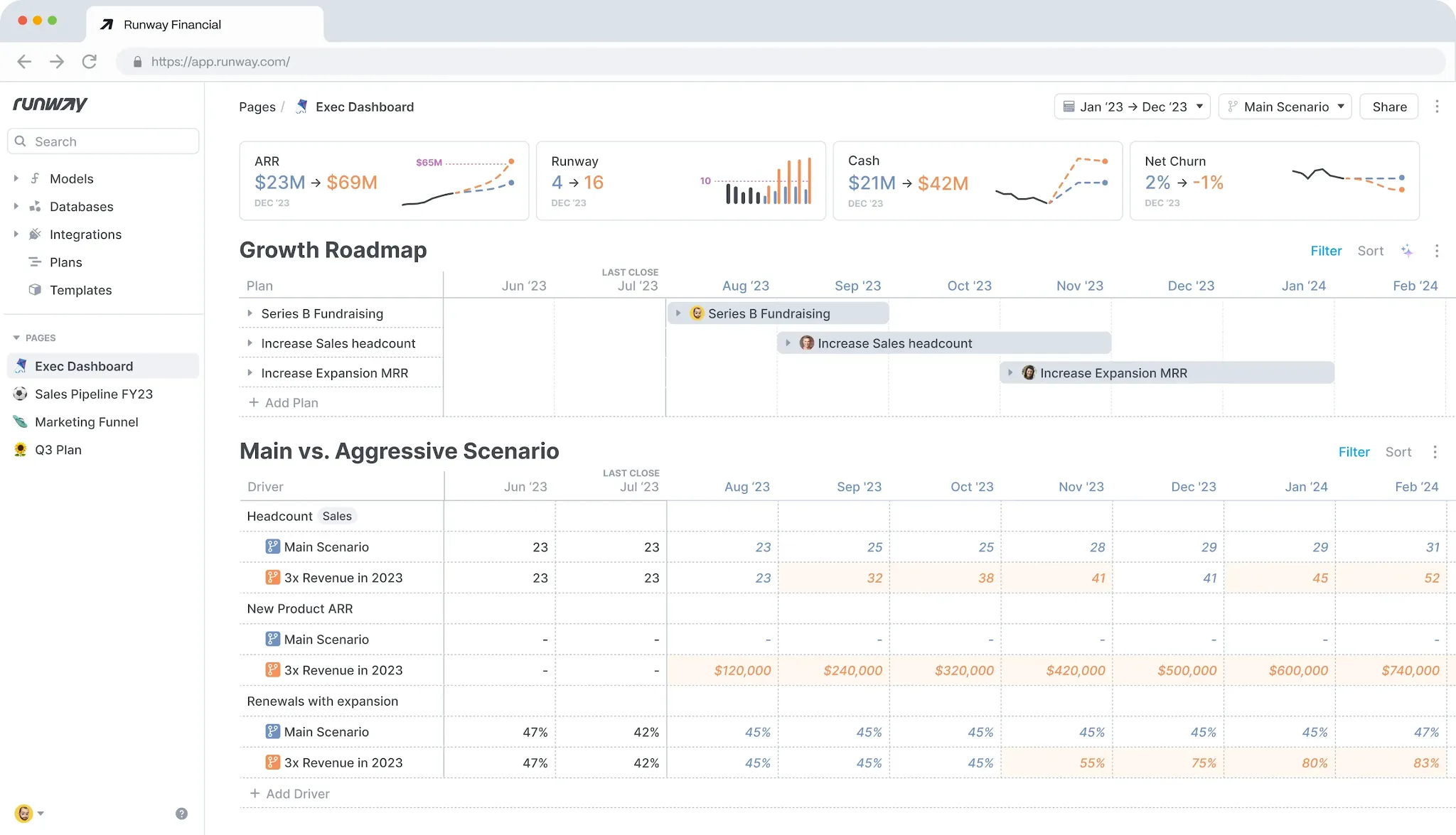
Runway is the modern FP&A platform that makes financial planning accessible to everyone in your organization with natural language modeling.
It supports scenario planning that incorporates hiring costs, compensation modeling and workforce capacity — key components for HR leaders engaged in employee engagement, growth planning and scaling global teams.
Best for: High-growth startups that need flexibility and speed in their financial analysis.
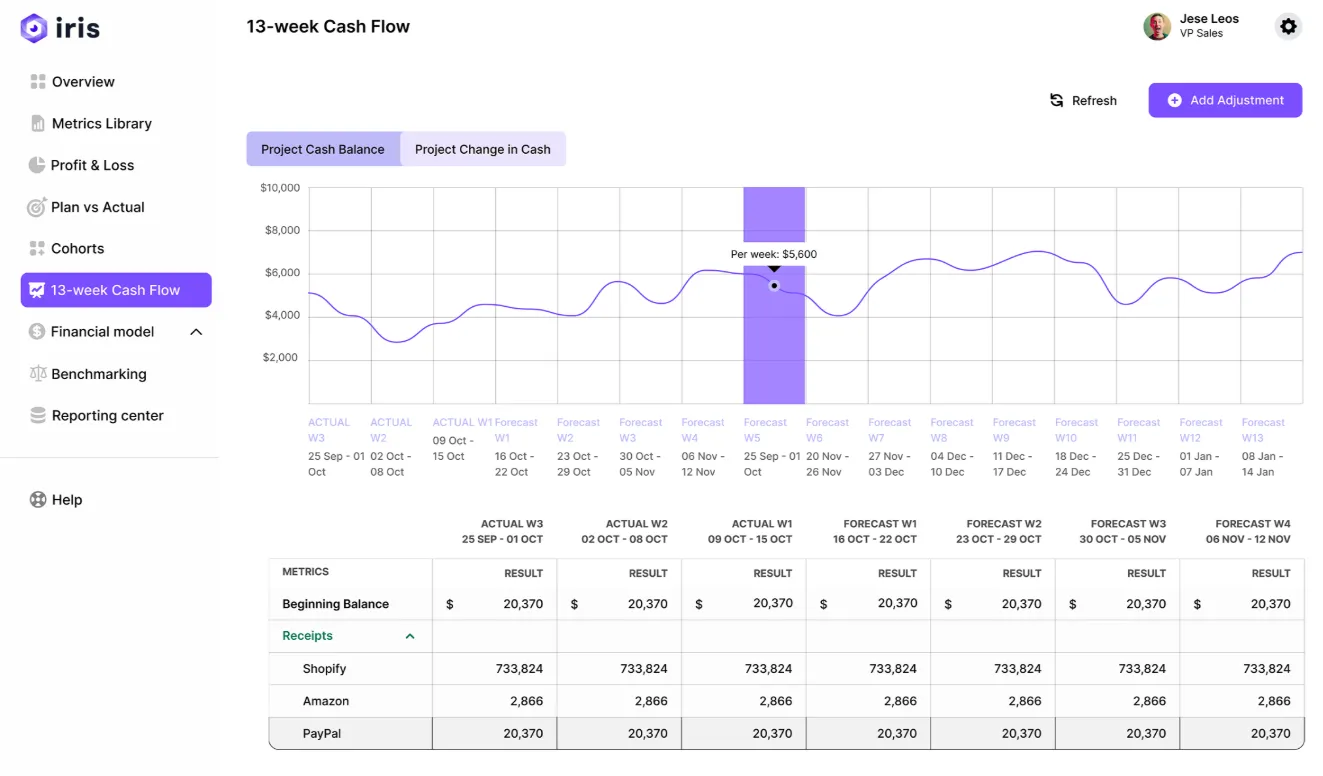
Iris is the newest player on this list, an AI-native platform built for companies that sell physical products.
Iris brings together inventory, P&L and employee data from operational and HR systems, giving product brands a unified, real-time perspective. Its AI agent complements HR-related forecasting, such as payroll impact, staffing costs and benefits administration projections.
Best for: CPG brands, DTC companies and any business with inventory that needs to understand unit economics across multiple sales channels.
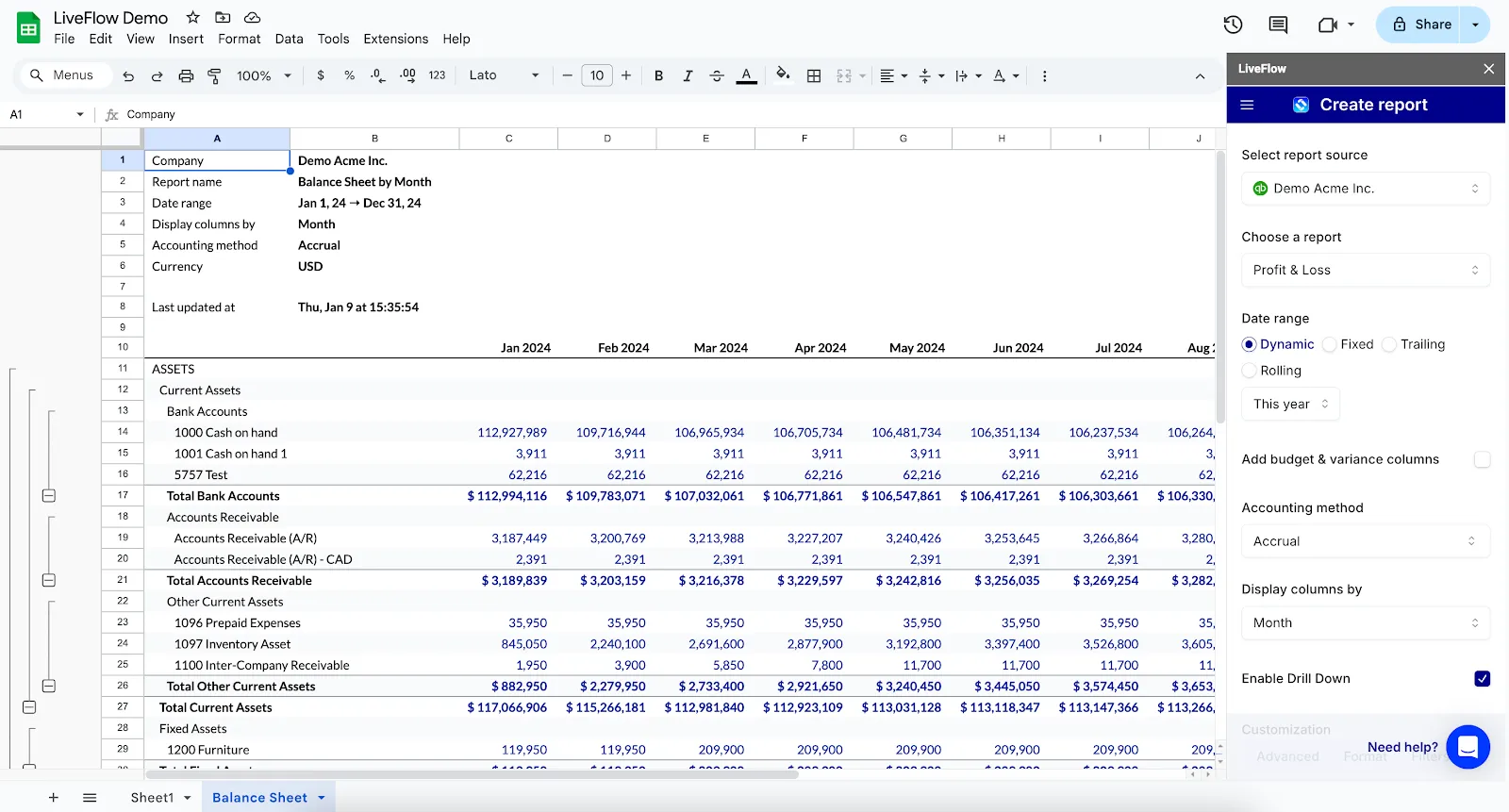
LiveFlow automates the tedious parts of financial reporting by connecting QuickBooks or Xero directly to Google Sheets and Excel, eliminating manual data exports.
Many teams use it to sync payroll and payroll processing data from systems like Gusto or ADP into Google Sheets for consolidated financial and workforce reporting. This makes it a simple but effective tool for integrating payroll platform data into FP&A models.
Best for: Small finance teams, accounting firms and fractional CFOs who need to automate reporting without changing their entire workflow.
Here's what it comes down to: picking the right Workday competitor is about finding a tool that matches where your business is today and scales with where you're going tomorrow.
If you're a founder juggling ten different priorities, you don't need a three-month implementation and a training manual thicker than your investor deck. You need financial management solutions that work immediately, provide clear insights and grow with you. The best tools don’t just streamline finance — they empower your entire organization to focus on strategic initiatives instead of repetitive administrative tasks.
Choose Fuelfinance if: You need expert CFO support alongside powerful software with AI-powered forecasting, unit economics tracking and 350+ integrations to critical business tools, without hiring a full finance team.
Workday Adaptive Planning doesn't publish pricing, but industry sources suggest costs start around $25k-$40k+ annually, with additional implementation fees. These types of tools have custom pricing tailored to your company's size and needs.
Workday’s price can increase when bundled with its HCM, payroll management, benefits administration or workforce management features.
You can get started with Fuelfinance in just 2-3 weeks. For comparison, Workday Adaptive Planning typically requires 2-5 months of implementation time.
Start with your specific needs:
Consider integrations with your:
The best FP&A tools (like Fuelfinance) enhance spreadsheets but can also replace them. Spreadsheets remain valuable for ad-hoc analysis and custom calculations. What FP&A software replaces is the manual data gathering, version control chaos and error-prone consolidation that makes spreadsheet-based planning painful at scale.
FP&A tools can automate the painful parts, including consolidating employee data, payroll figures, workforce costs and HR inputs so your data stays clean, reliable and strategic.


Just imagine how that would transform your team’s productivity and focus? Talk to our financial experts to know more.